Interview with Author Geoffrey Gudgion

Gudgion-arbour I’m delighted to welcome Geoffrey to my blog to chat about his début novel Saxon’s Bane and various aspects of his writing life, including what he’s working on at the moment.

On Amazon, I  awarded Saxon’s Bane five stars and titled my review “A Superb Debut Novel by a Master Storyteller”.  I won’t tell you what the story is about, as Geoffrey is going to do that. All I can say is that I found it an exceedingly exciting read, of the sneaking-looks-when-you-should-be-working variety, and one of those novels your mind keeps returning to long after you’ve put it down.Geoffrey managed to make me care deeply about the fate of the three central characters (plus the horse), raising my pulse-rate far too high on occasions, while causing me to wish the stickiest of ends upon the baddie and his cronies. He paints a wonderful picture of a present-day English village: one rooted in a more savage past that, once unearthed, reasserts itself upon the psyches of so-called civilised people.

SP: Who is Geoffrey Gudgion? I know, but perhaps you’d like to tell the others.

GG: I’ve been many things. A Royal Naval Officer, but they weren’t quite ready for me, and a businessman, which paid the bills even though Corporate America wanted my English soul. Now I have one part-time job but mainly write. When not writing I go a bit mad on horseback. I’m married with two great kids who are old enough to be off the payroll. Oh, and I’m a really bad pianist. Is that enough?

saxons bane mockupSP: For the benefit of potential readers, could you describe Saxon’s Bane in a few sentences?

GG: It’s a thriller with a supernatural twist. An archaeologist shows a preternatural understanding of the Saxon couple she is excavating. A young man comes close to death in a car crash. Two people whose insight might be dismissed as obsession or post-traumatic stress, until the modern world around them starts to mirror the ancient, bloody past…

SP: Despite ending up with Solaris as your publishers, when working on your novel you had no idea it was fantasy novel. What sort of novel did you think you were writing?

GG: I simply didn’t understand ‘genre’. I had a story that was fighting to land on the page, that’s all. When it was published, people started labelling it ‘fantasy’, which surprised me because it’s meant to be believable in a real world framework. It’s also been called ‘horror’, although I think it’s a bit too lyrical for that, ‘historical’, even though 80% is set in the present day, and ‘literary’, which is good for my ego. Hell, it’s a ghost story.

SP: Like many creative people, you felt obliged to go down some “respectable” career paths first. Do you see this as wasted time, or as useful experience to draw upon in your writing now? And you don’t have to answer this if you don’t want to, but is your main character Fergus’s explosive walk out from his job based on your own experience?

GG: Wasted? Nah. All life is a script, and life in the Boardroom gave me a wonderful supply of characters. And as for Fergus’s row with his boss, who hasn’t relished the thought, perhaps many times in their career, of telling the bastard on the other side of the desk what they can do with their job? I loved writing that bit.

SP: In your novel, you paint an extremely vivid picture of the English countryside and rural life. A reviewer complimented you on your ability to revive and modernise the great classical tradition of rural British horror, proving there’s nothing creepier than the countryside. Is there a time when you’ve freaked yourself out with your own imagination and had to run for civilisation without looking back?

GG: No. That must either mean I’m writing tame ‘horror’, or I’m really sick. Seriously, though, it is the unknown that freaks us out. As a writer, you know what’s coming. And if you don’t, you’ve lost the plot and that IS freaky.

SP: An emotionally damaged horse features greatly in Fergus’s convalescence following his near-fatal car accident: a sort of mutual healing between man and beast. Is there any parallel between what youBally & helmet describe in your novel and your relationship with that handsome horse you own in real life?    

GG: Horses possess a deep, wild empathy. They can understand us at a primal level, and unlock emotions that are buried within us. No horse has ever healed me in the way that Trooper heals Fergus, but horses have helped me keep my equilibrium. I can climb into the saddle tense, but the mental slate is wiped by the adrenalin-charged madness of a gallop, or the surge-and-soar of jumping.

SP: Now you’re not burdened with a day job, how do you organise your writing time and physical writing space?

GG: It depends on the stage I’m at with a book. On a writing day (and sadly that still can’t be every day) it’s tough at the beginning of a project and I have to force myself to craft words. By the end, it becomes and obsession and nothing else matters. It’s a bit like wading out into a river, slow and muddy at the edges, but once the current takes you it’s quite a ride. I write best in the mornings, and my most creative space is an arbour in the garden. When it’s too cold for that, I have a study where I play English birdsong as a background while I write.

SP: Now you’ve nearly finished your next novel, did you suffer or are you still suffering from any of the “second novel” anxiety experienced by some authors?

GG: I did at the beginning. I started Saxon’s Bane in hubris (“I can do that!”) and finished in bloody-minded stubbornness, determined to break through despite the rejections. By the time my agent Ian Drury accepted it, I knew what good looked like. The first drafts of my second book, Catherine Bonnevaux, were not good, and I had to learn to push on and leave imperfection behind me. I’d written 120,000 words before I knew it could be turned into something good.

SP: What is the second novel about?

GG: When newly affluent businessman Paul Devlin and his girlfriend Fiona buy a barn conversion near Halstead Hall, the ancestral home of the Bonnevaux family, they believe they are buying a rural idyll. They are met by a wall of resentment, and are drawn into a conflict that has its roots in pagan times. It’s a ghost story that interweaves modern greed with medieval piety and Dark Age myth. There’s a fuller overview on my web site at http://wp.me/P2FmIH-aR

SP: Having spent time in the Royal Navy, would you consider writing a contemporary maritime fantasy novel drawing on some of the wonderful sea myths?

Last year I went sailing with a friend, and we moored one night in a remote inlet where a Saxon church sat hunched on the shoreline and the bones of dead sailing ships poked through the mud as the tide went out. The setting gave me some ideas that may well surface in a future book.

Sarah, thank you so much for inviting me onto your blog. I’m honoured to be here!

And thank you to you, too, Geoffrey. It’s been a great honour and pleasure to have chatted with you. SP 🙂

 

May’s Guest Storyteller, Cybele Moon

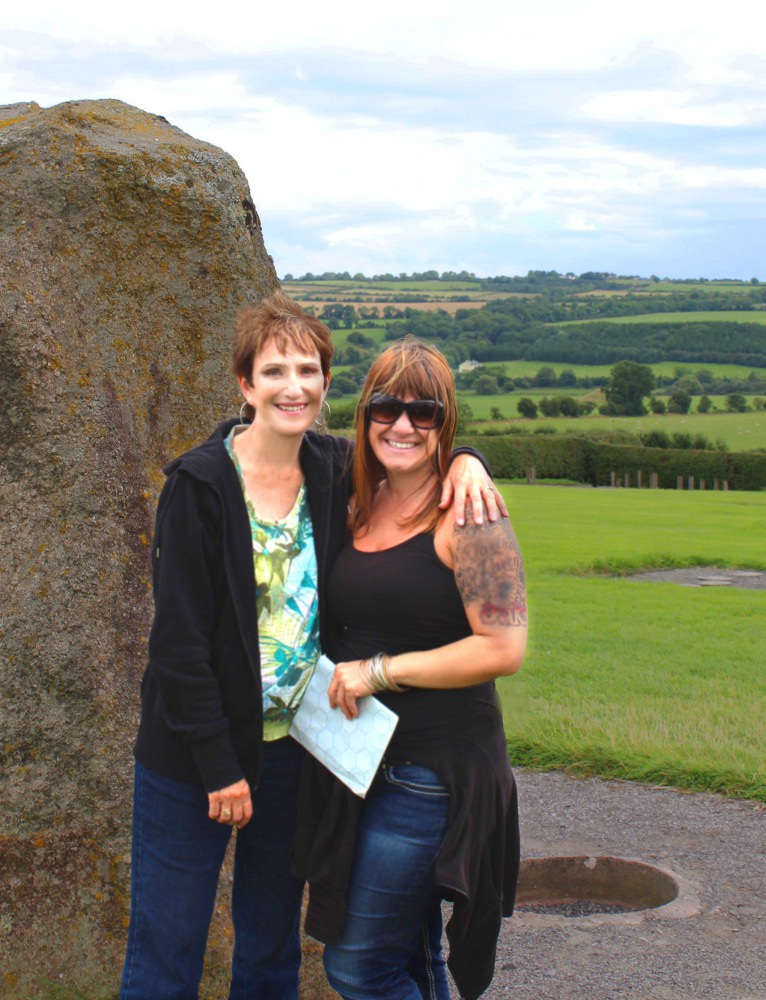
Cybele (L) & daughter

Not all who wander are lost” – or have attention deficit disorder

By her own words Cybele Moon is a somewhat introverted but passionate traveler in many realms, seeking old bones and philosopher’s stones, – and other such treasures! History, astronomy, and paleontology have been among her interests.

She loves to wander off the beaten path in search of adventure and is a great friend of  Murphy who states “when all else fails, read the instructions” — or in this case refer to the map. Just ask her daughter, the navigator and keeper of time, who, by the way, is a grand travel companion and never misses a train.

She was an English Lit major in college way back when, and has always had a fervent love for the written word. At the same time she also enjoys photography and so began a quest to create visions and tales that complement each other.

 #

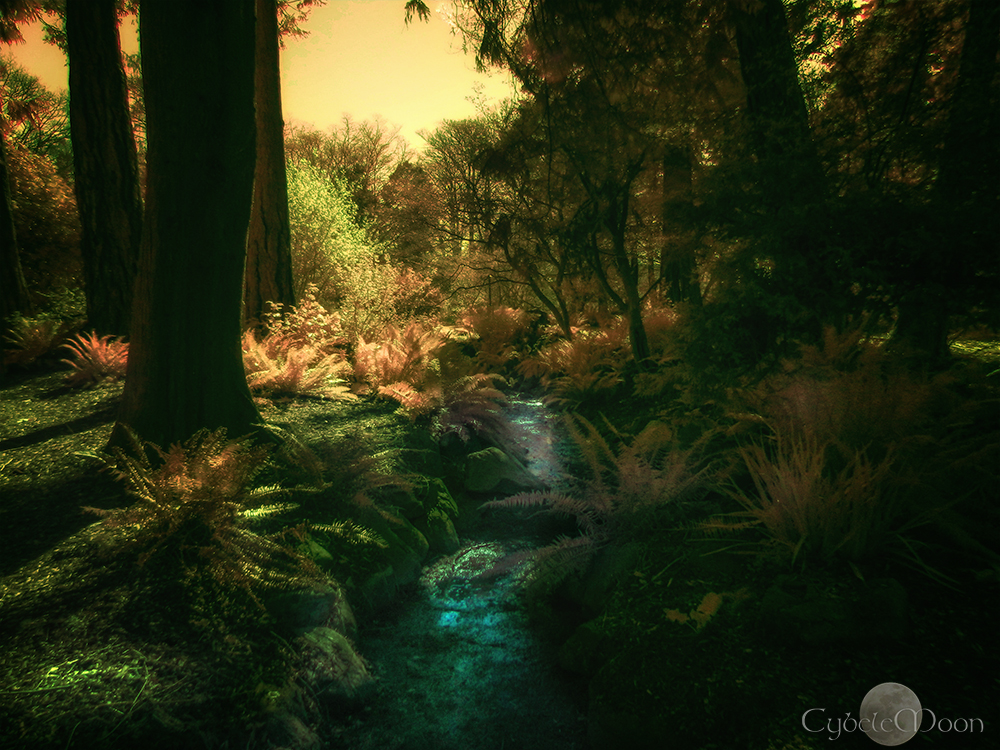
An Extract from Niamh’s dream journey (Tales of the Tuatha)

Niamh's path of dreams

She had followed the stag down from the knock until it disappeared into the grove. The people of the Sidhe were near. She could feel them as Aine’s red mare climbed the hill, spreading her bright cloak across the star scattered sky and the trees below. For a few moments there was silence before the sweep of light awoke the birds to their exaltation. The sacred spring was deep in the forest and any who drank from it were granted great wisdom. Not all had the eyes to see it, but she was, after all, a daughter of the Tuatha.

beacon streamsmall

As she followed the way deeper into the woodland, Niamh became confused. She looked at Etain’s map. So, was it right or left at the tree by the little stream? Something was definitely wrong and nothing looked familiar. Should she go back to the beginning? She untied the small pouch on her belt that contained  her dreams to make sure she wasn’t confusing one with another, but the purse slipped out of her fingers. All the dreams spilled out onto the path and went spinning backward into the soft curve of the early morning mist. “Now I’ve done it!” she thought.

She retrieved one that had rolled up against a tree. This as going to be very troublesome she thought as she held onto it tightly. There had been nine dreams in the pouch including the one that had begun her quest in the early morning light — and still no spring was in sight! She didn’t even think she could find her way back to the mound, and she couldn’t return without her dreams! How could she have been so clumsy?

tuathacoloursmall

As she searched the thicket she suddenly found herself standing by a shining lagoon. Everywhere there was the glint of gold!

#

Sarah says: Thank you so much Cybele for this beautiful tale, told in traditional storyteller style, and  for your magical photographic illustrations.

And fellow bloggers, you can read the ongoing Tales of Tuatha from the beginning, as well as lose yourself in more of these illustrations at Cybelshineblog, where she calls herself Dune Mouse, which I think is a lovely name for a creative introvert!

#

For a catch-up read of previous stories, please do visit my page https://sarahpotterwrites.com/guest-storytellers-2/

Quote: “I’ve been disappeared”

SarahWriting

Question: Whose favourite expression is “I’ve been disappeared”?

Answer: The main character in my novel, Anna.

Next question: Why am I quoting him (yes, “him” not “her”)?

Answer: Because I have been disappeared, editing onward to THE END.

Of course, this doesn’t mean the work is over. Far from it. This Speculative Fiction novel of mine evolved out of a decision to stop second guessing the market and write something original. I even dared swim against the tide with a non-dystopian version of the future. Yes, the human race is threatened; no, the planet is not trashed beyond repair.

The project began on 1st January, 2013: what better New Year’s Resolution than a creative challenge? You can read a summary of my progress during that year here.

The next step was to throw my novel upon the mercy of three beta readers: themselves published, and one of them a freelance editor. Their verdict … beautiful prose, original, a few plot holes needing mending, too abstruse in places in an effort to avoid exposition, more dialogue tags needed, and greater differentiation required between character voices.

Back to the drawing board for four months, with the occasional cry of “not another thing to do!”. I admit to having felt annoyed with my beta readers at times, but that was because their constructive criticism was about 90% right. Of course, I’m eternally grateful to them for all the work they put into their detailed reports on my manuscript, considering they have such busy lives themselves and did it voluntarily in their spare time. Ultimately, I decided that if all three of them pointed out the same thing, then it needed attention.

It’s unusual for a second draft to end up longer than the first (62K words, grown to 90K), but I went for minimalism initially and then had to build on this. I did edit some things out, just because they didn’t fit with the characters’ voices as they developed. There was a degree of juggling around chapters, putting some back story  into real-time and, where this was impossible, turning back story into proper flashbacks.

This next week, I intend to print out my manuscript and check the plot hangs together after all the changes I’ve made. At the same time, I will do a full proof read as it’s so easy to miss mistakes when checking work on the computer screen.

Just as a closing bit of fun, does anyone remember that tagging game named Lucky Seven Time that did the rounds of WordPress a while back, where you had to post an extract from page 7 or page 77 of your work in progress? Having just looked back at my Lucky Seven post, I thought it would be interesting to compare my page 7 extract from then with a page 7 extract from my present version of the manuscript.

15th February 2013 version

“You’ve gone insane.”

“No, it’s you who’s insane for bringing me fish?”

You scowl up at the sky, as if there’s a cruel memory pinned to the stars. I look up. There are no stars. Only the face of a mother—the last mother on earth to have given birth. Your mother.

“She’s dead,” I remind you.

“She lied to me.”

Current version

“Oh, Anna, I can’t bear it. You’ll have to wear a hat until your hair’s grown back.”

We’re both spurting tears as Ka moves between hugging me close, pushing me away with the flat of her hand, or poking at me with a finger. I wonder whether it’s my bones or hers that will snap first. My arm bleeds, where she’s jabbed me with the scissors whilst wrestling them off me. I think I’ve cut her, too. Our blood and tears are smeared together.

“I love you, Ka, I love you. I really love you.” These words spill from my lips while I’m thinking, I hate you, Ka. I really hate you.


Guest Post: Editor, Gary Bonn, Talks About His Fascination for Autobiographies

The sheer joy of editing (really!). Gary 1 290x290

The startling revelations of scary intimacy.

Themes that shock your soul.

Most authors are happy to edit other people’s work. This is often a reciprocal exercise and I don’t know of a single writer whose work doesn’t benefit from their having edited the work of others, or whose writing hasn’t been significantly improved by the labours of skilled and experienced input.

I am an editor, and working on autobiographies is my favourite by far. Everyone has a unique and fascinating life and I haven’t worked on a single autobiography that doesn’t have profound themes.

*Gasps from the audience* “Themes in non-fiction?”

Oh boy, yes.

Currently I’m working on the autobiography of a nurse who worked in the community, in a bombed-out area of London, shortly after the second world war.

As if her descriptions of post-war chaos, the beginnings of the Health Service, the antibiotic and immunisation revolutions weren’t enough to blow my mind, there are social and personal themes in her commentary that enable me to step outside of my world and take a hard look at how things are now—both in my world and in me.

As in fiction, the editor has to work out what the writer is trying to say, exterminating ambiguities, clarifying the unclear, and strengthening the weak. This is the most beautiful challenge, taking people’s often blurry ideas and accounts of real life and working with the writers to make everything crystal clear.

And you learn about the authors. There is nothing more fascinating to me than another human. I…

Oops… yes… themes… ahem. I was getting there, honest.

Themes are the depth of a novel and the most moving element of a personal history. But there can be no richer source of themes than another person.

Everyone heads off into life armed with around 18 years of it and the knowledge that they know just about everything. When amply supplied with 80 years’ experience, and the realisation that they’ve never really known anything, people’s wisdom and humanity are often their strongest points. These can reveal the themes of human existence—and can profoundly shake you.

One client was dying, and this catalysed a unique situation. On toxic levels of medication to fight the oedema that crept, day-by-day, up her legs and would eventually flood her lungs, she started to tell me her life story. Recording it was a race against time as either the medication, or heart-failure would inevitably kill her.

However, she became more interested in my life and insisted, like an interrogator, “I’m asking the questions!”.

So, over a couple of weeks, we discussed ourselves and each other.

What developed from this highlighted just about the strongest human theme imaginable. Fuelled by impending death, my client became increasingly honest and open. She warmly encouraged me to do the same.

I kept taking notes – notes I’ll probably not allow to be published, for both our sakes. Never have I had such an intimate conversation. It was a mutual invasion of each other – but with every question welcomed, respected and handled with absolute honesty and openness.

Scary stuff, asking a question reveals a lot about the person asking it.

We abandoned any moral judgements of each other. She helped me find the courage to follow her lead and ask personal questions. She led us both to a revelation.

The theme? How little we humans know about each other, how much we could know, but dare not ask about; how scared we are of ourselves, of revealing our most intimate secrets, even to close friends and relatives.

I’ve never heard of a conversation so unrestrained. Surely it’s happened to others at some time, but there’s nothing in all the literature and other media I’ve come across that even approaches it.

What emerged, and profoundly shocked both of us, was the depth of separation between people and the desperate tragedy of it. Even in our closest relationships we reveal very little of ourselves and know so little of each other. The tragedy is we are not aware of it.

My client and I realised how lonely humans are, at least in our culture, and how close they could be.

In a world where politicians role-model ways to humiliate and ridicule even a single statement made by another, and strut their momentary moral superiority like posturing cockerels and hens, it’s easy to understand why we’re so timid.

Caught up in this extraordinary situation, driven by imminent and inevitable death, this awe-inspiring and courageous woman pushed us both into a whirlpool of openness and unconditional acceptance. I learned not only how easy it is to accept everything about someone, but also how wonderful it is to have a person know you completely and yet still admire and cherish everything about you, no matter how much you despise yourself .

Maybe the details will never be aired, but, for me as a novelist, this theme is too hot not to handle.

#

Sarah says: Thank you, so much, Gary for sharing this insight into autobiographies. I admit to not reading an autobiography for ages, but perhaps I should.

My beloved Grandmother, who died aged 98, read them avidly up to the end of her life. I remember her sometimes getting through about four books a week; then she’d delight me with snippets about whoever she’d been reading about, calling them by their first name as if they were her best friends. 

Other guest posts by Gary:

https://sarahpotterwrites.com/2014/04/05/aprils-guest-storyteller-gary-bonn/

https://sarahpotterwrites.com/2013/12/16/gary-bonn-talks-about-writerlot-where-im-guest-storytelling/

And for anyone interested in having their manuscript professionally edited by Gary, you can check out the details at

http://garybonn.com/about/editorial-services-2/

April’s Guest Storyteller, Gary Bonn

Gary 2 290x290Gary Bonn, me … a bio. Shouldn’t be hard. Men like talking about themselves, don’t they?

I live in Scotland, write books, short stories, edit other people’s books and … oh, wot? … this is harder than I thought.

I’m delighted to have had two books published, and there’re more on the way. I like to write in as many genres as I can. This is more or less down to my friends at WriterLot, who challenge me with, “Gary, you haven’t written from the point of view of a frog”, write a story named “The Girl, The Kite, And The Broken Gate” and, “How about a sweet little vampire story too?”.

I baulked at the last and wrote the book, “Expect Civilian Casualties” instead. Why write about vampires? It’s been done.

Actually, WriterLot is a laugh. The members ensure that a new piece of writing goes up every day. We’re always happy to include guest-writers’ pieces, so feel free to contact me through garybonn.com.

If any of you are short of reading material, do visit writerlot.net and garybonn.com. It’s all free.

A big thanks to Sarah for inviting me to this blog!

#

Sarah says: You’re most welcome, Gary. It’s always a pleasure having you visit my blog and grace the place with your originality and wit. As for your story below — that wry take on the inefficiency of road maintenance in the UK (both North and South of the border) — all I can say is LOL! And so, a warning to fellow bloggers, do not read what follows while holding a beverage anywhere near your computer keyboard for fear of spillage.

#

YAAD

Bill Wild is acting a little odd today. The lashing sleet rattles his hi-vis jacket, but utterly fails to wipe the smug grin from his face.

With the ease of many years’ experience, he winches the generator from the glistening road and secures it on the back of his lorry.

A passing car slows and the driver’s window slides down. The driver shouts to Bill, ‘Thank the bloody gods. How long have these roadworks been here?’

Bill, given more to economical truth than downright lies, shrugs and says, ‘It’s been a while, hasn’t it?’

The driver goes on, ‘But what did you actually do? I didn’t see anybody working all these months.’

Bill shrugs again. ‘Dunno. I’m just the bloke that puts up the traffic lights and sets the cones out.’

The driver, under pressure from traffic behind, moves off into a flurry of wet snow, tyres hissing and squelching in slush.

Bill collects the last of the cones, stashes them lovingly, even patting them and muttering his thanks, and climbs into the cab.

He shrugs off his jacket and takes a moment to enjoy the way the warning lights on his lorry sweep swathes of yellow light, gilding the dripping trees and banks of bracken.

He’s looking forward to the headline news tomorrow. All it needs is one anonymous call and some photos plastered over the internet.

As Bill revs the motor; the lorry trembles and shakes like a wet dog.

A woman, half-hidden behind the wind-whipped foliage at the side of the road, lowers her camera; a mute witness of Bill’s triumph.

He says to his phone, ‘Call the headquarters of “For No Good Reason”.’

As he pulls away for the last time, a woman’s voice comes through the speakers. ‘Mr Wild, we are honoured to receive you into the ranks of the élite. A year and a day. Well, well, who’d have thought no one would question why roadworks sat there so long without anyone actually working? You are our first official Year And A Day member.’

Bill replies, ‘Thank you, Mary. But there’s more to this day, for me, than my becoming an élite. No way will Mac be able to top this. It’s a double victory for me. We had a bet on.’

‘You had a bet with Mac? That’s courageous.’

‘The loser gives all his traffic equipment to the winner. He can’t afford new stuff. He’s a goner.’ He smirks, cuts the connection, and turns the radio on.

After the booms of Big Ben, come the headlines.

‘The Queen’s Flight, carrying members of the Royal Family on their way to Balmoral, has been forced to divert to the only other open airport in the British Isles, Dublin. Prestwick Airport has been closed due to the inexplicable, overnight appearance of roadworks on the main runway.’

#

https://sarahpotterwrites.com/2013/12/16/gary-bonn-talks-about-writerlot-where-im-guest-storytelling/

https://sarahpotterwrites.com/guest-storytellers-2/