Yay! It’s Publication Day for Sara Crowe’s Young Adult Novel “Bone Jack” :-)

51OspgEiqZL._SY445_Ash’s dad has returned from war. But he’s far from the hero Ash was expecting. He’s close to a breakdown, lost in a world of imaginary threats. Meanwhile, Ash’s best friend Mark is grieving and has drifted away into his own nightmares. Ash’s only escape is his lonely mountain running, training to be the stag boy in the annual Stag Chase.

But dark things are stirring. Ghostly hound boys prowl the high paths, and in the shadows a wild man watches. Ash begins to wonder if the sinister stories about the Stag Chase are true. Could Mark and Dad be haunted by more than just their pasts?

sara1

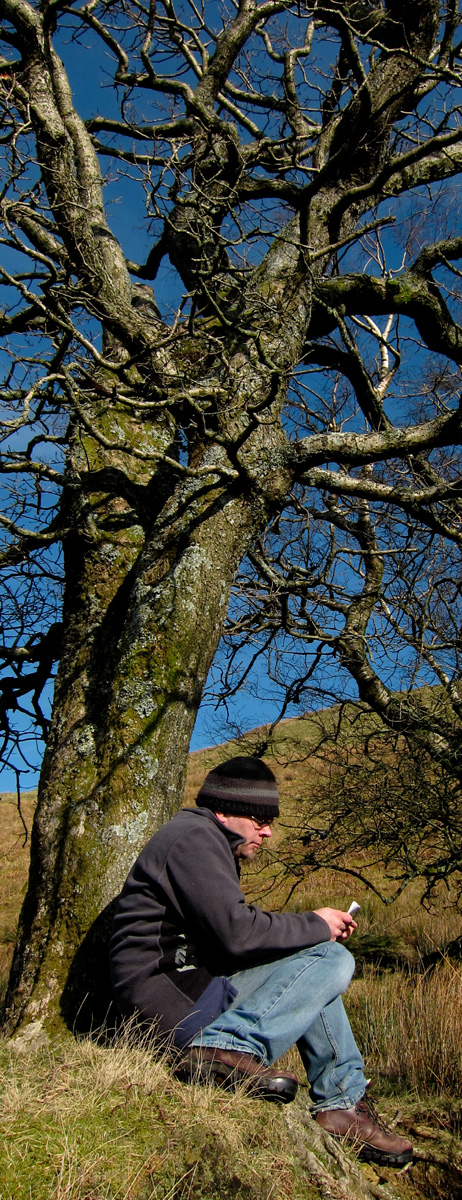
Sara Crowe is a writer and photographer. She was raised in various parts of England. In 2012, she and her partner set off in a camper van and have been travelling around Britain ever since.
Her interests include folklore, collecting and using vintage cameras, nature and wildlife, and going for long walks with her dog.

She blogs at http://theforest.me

Bone Jack, her debut novel, is published by Andersen Press/Random House

It’s available in paperback and Kindle versions in the UK and Commonwealth countries from Amazon, Waterstones, and all good bookshops.

#

Sarah P. says: I’m so excited for Sara having arrived at this great day. We first met on an on-line writing colony before she had an agent or a publishing deal, so to see her travel this journey to success is such an inspiration. She’s a very talented writer, whose rich and haunting prose, world-building and characterisation will delight young and old alike.

In the next couple of months I will invite Sara to my blog for an author interview, when those of you who’ve read  Bone Jack will have the opportunity to post mini reviews in “comments” and put your questions to her.

Wishing all the best 🙂


Guest Blogger Kate Kelly Talks About Her Children’s Cli-Fi Novel & Her Route to Publication

kkarctic2Thank you, Sarah, for inviting me over to your blog to talk about how I came to write a Cli-Fi novel for kids.

Cli-Fi, which is short for Climate Fiction, is an emerging genre – not necessarily a subset of science fiction – which tackles themes of climate change, either natural or man-made. It’s a natural development. As the world becomes more aware of the impact that the discharge of greenhouses gases into our atmosphere is likely to have, both for us and for our descendants, it is only to be expected that such themes and concerns will be reflected in the fiction of our age.

But when I started writing Red Rock it wasn’t my intention to write a Cli-Fi book. In fact I only heard of the term Cli-Fi after I got my book deal.

The inspiration for Red Rock came out of my work as a Marine Scientist. Some years ago I took part in several oceanographic surveys into Arctic waters. I remember my first sight of sea ice as we approached the Marginal Ice Zone, the way it heaved and creaked in the swell. I saw puffins and polar bears, seals and whales, and watched the aurora dancing across the sky. The Arctic has a beautiful desolation about it. I remember thinking how fortunate I was to come to this place and see the ice floes, for, if current trends continue, in a hundred years or so it could all be gone.

But 110,000 years ago, during the last major interglacial period (the Eemian), the world was in fact a few degrees warmer than it is now, the Greenland ice cap all but melted and sea levels were several metres higher than they are now. I couldn’t help wondering what the world must have been like at that time, what creatures might have lived, and how little we know about what lies underneath the Greenland ice.

These elements came together to inspire Red Rock. I’m not going to say any more about how the Eemian interglacial fits in – you’ll just have to read the book to find out!

RRcoverWhen I first had the idea I pondered whether to write it as a story for adults or for children. There are always many different ways in which you can tell the same story – the trick is to find the way that works best for you, and for me it felt right that Red Rock should be a children’s book. I had rediscovered children’s literature through my own children and I knew in my gut that this was the audience I wanted to write for.

My journey to publication was relatively standard, although I am unusual in that I am one of my Agents few clients that she didn’t find through the slushpile. (Don’t fear the slushpile and don’t believe the rumours – it is how most agents find 90% of their clients). I met Julia when I booked myself into a 1-2-1 surgery at the Frome Festival. I submitted my first chapter, hoping for useful feedback, so when I ended up getting signed I kept having to pinch myself to prove that it was real. A book deal followed about a year later. (It’s a slow process) and finally, last September, I held a copy of my own book in my hands. It was a magical moment – and the culmination of an awful lot of hard work!

OLYMPUS DIGITAL CAMERAIf you want to find out more about me and my writing I keep a blog at: http://scribblingseaserpent.blogspot.co.uk/
You can also follow me on twitter, facebook and goodreads.
@gabbrogirl
https://www.facebook.com/KateKellyBooks
https://www.goodreads.com/author/show/6538135.Kate_Kelly

Red Rock is available from all good bookshops as well as in a variety of e-book formats.

I am also available for talks and visits – please see the ‘events’ page on my blog.

#

Sarah says: Thank you so much Kate for that fascinating post and for taking the time to tell us the background to the publication of your children’s novel. I highly recommend this book as well worth a read, whatever your age!

You may also like to read a previous guest post by Kate from back in January

https://sarahpotterwrites.com/2014/01/19/points-to-consider-before-posting-your-work-online-by-childrens-author-kate-kelly/

March’s Guest Storyteller — Benjamin F Jones

Writer Benjamin 9835-2Benjamin F Jones is a writer from South Wales in the UK. He has worked in over twenty different jobs from wedding photographer to aerospace engineer but is currently studying to be a humanistic therapist.

His first novel, 400 years between stars, is coming out in March 2014 and he is currently working on a collection of prose poetry entitled, Which can fly higher, dragons or aeroplanes?

He has a passion for prose poetry and short and rather quirky science fiction but has a background in poetry which adds a colour to everything he writes. Some of his short prose fragments can be found at GraphiteBunny.

Wattstown 0394-2

Freedom Climbs on Logs Rooted

Freedom climbs on logs rooted in bricks worn smooth as oranges. The blue is cluttered with battleship clouds that muster to confuse the sun. Girls in summer dresses and bobble hats throw stones at the waves – a cacophony of pebbles thrashed by the sea as we poke a dead gull into the water. Silver rain conceals land across the estuary. We’re drumming on flotsam and steel chimes as engineers build a barbeque from bomb factory shrapnel – the explosion shattered the hotel windows over a mile away. A boot filled with shells. Driftwood stokes the flames that snatch at dinner. We open crown tops with scrap metal and eat sausages with sand and missing ketchup. When the meal is over we find pieces of crystallised sky have fallen like thumbnail glass. Tracking footprints you sing as we follow the tide. The sun is on mute. My shirt smells of wood-smoke and charred marshmallows. I wring out the memories and put them into my mouth.

#

Sarah says: Thank you so much Benjamin for guest storytelling on my blog with this superb piece of prose poetry. For those of you who missed Benjamin’s earlier contribution to my blog, you might like to take a look at his amazing photographic contribution to the Wordless Wednesday slot back in October last year.

You can link to previous guest storytellers’ prose via this page.

Guest Storyteller, I. J. Sarfeh

I. J. S.I. J. Sarfeh was born in Tehran, Iran, to a Persian father and Russian mother. When he was nine years old, his parents sent him off to an English boarding school — he believes they thought the British system would correct his unruliness. After spending the formative years there, he and his family moved to America, where he studied medicine, became a board-certified surgeon, and ended up on the faculty of the University of California. In 2000, he retired as Professor Emeritus to pursue his original passion before being lured into medicine: creative writing. So far, he has written eight novels, most of which are in the medical mystery/suspense genre. He changed genre for his latest novel, Beyond the Third Garden, which draws on his experiences during the childhood and formative years, which were far from ordinary.


HIDDEN COURAGE

I was fourth-assistant at an operation to remove a patient’s cancerous stomach.

In awe, I watched the surgeons operating with grace, speed, efficiency. The music of Mantovani’s violins wafted from a portable radio, while the procedure flowed along as smoothly and effortlessly as the cascading strings. Without wasted movements, each action blended into the next like the harmony of the orchestra.

After removing the stomach, the surgeons fashioned a new one using a length of intestine cut down the middle, doubled on itself, and sewn together. The result was a pouch that could hold a modest amount of food, which they attached in continuity with the rest of the digestive tract. Then, using thick nylon sutures strong enough to hold the sinews together, they started closing the abdomen.

Halfway through the closure, I glimpsed a flash of metal.

Instrument or illusion?

Now began my struggle to inform the surgeons—during major operations, medical students were bound by the not-even-a-squeak rule.

Two more stitches, and my mouth was bursting to squeak.

I looked at the chief surgeon, a big man with an attitude. “Dr. Krabowski, m-may I s-speak?” I stammered in a near whisper.

He glared at me over his mask and half-lenses perched on the tip of his nose. “What?”

“I-I saw this shiny object.”

“Congratulations. The O.R. is full of shiny objects, so now we know you can see as well as speak.”

Laughter.

Struggling through the overdose of intimidation, I pressed on. “I hope the object inside the abdomen won’t harm your patient, sir.”

His eyes bulged. “Inside the abdomen? You think we left an instrument behind?”

“I don’t know what it is, sir.”

“Are you certain it’s there?”

“Well, I…”

Silence.

“Speak up!”

“It’s in the right upper quadrant, sir. Hidden from view.”

“Do you realize we must reopen the whole abdomen to explore that area?”

A hesitant nod.

He cut out six stitches, groped around inside, and pulled out his hand. It brandished a shiny forceps.

“Well done!” he yelled. “You just saved the patient from serious post-op troubles, and us from a gazillion-dollar malpractice suit.”

Applause.

He leaned into me. “Name?”

“Wheat, sir.”

“What is surgery, Wheat?”

Blank stare.

“Give me the definition of surgery, man!”

I cleared my throat. “It is the art and science of—”

“Bullshit! Surgery is courage. In your case, the courage of persisting despite fear.”

At last, my courage was out of hiding.

#

Sarah says: Thank you, so much, Iraj, for visiting my blog as a guest storyteller. Your short medical tale is certainly an example of writing about what you know. I won’t ask if this incident is based on a true life experience! 

Click on either of the Amazon links below and it will take you to a page of novels by I. J. Sarfeh for you check out: Amazon.co.uk / Amazon.com

#

To read January’s guest storyteller post by Naomi Baltuck click here