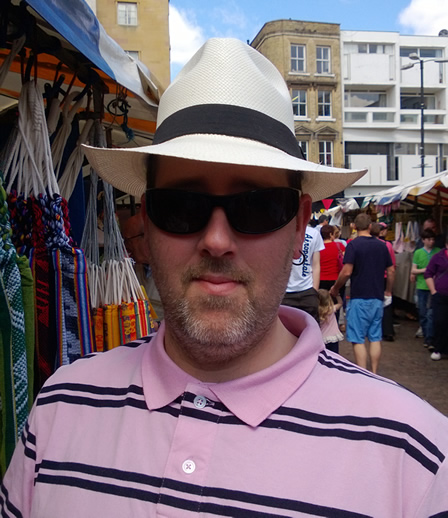
Interview with Author, Dave Farmer

davefarmerI’m thrilled to welcome Dave back to my blog for a third time. Some of you will remember his guest storyteller appearance back in June of last year, when he teased us with an extract from his speculative “what if” novel, The Range, which he went on to publish in November. For those of you who missed the publication day post, here’s the blurb.

News breaks of a deadly virus in Asia but, despite fatalities, few people take it seriously. Sheltered within the university bubble, Samantha and Louise are convinced the UK is invulnerable to this virus, until gruesome events unfold around the world and the death toll rises from hundreds to millions. By the time the virus reaches England and students on campus start falling sick, Samantha has to weigh up the risks of travelling home to London. She decides to sit tight with Louise and wait for everything to blow over. But the situation further deteriorates in ways the two friends couldn’t have envisaged. Their student flat is no fortress and there’s only one place they’ll be safe: The Range.

I found the novel both gripping and thought-provoking. Dave has a fantastic imagination and I wish him every success with his intended “Bloodwalker Legacy” trilogy, of which The Range is Book 1.

And now a few questions for the great man himself…

SP: When and why did you start writing novels, and is The Range your first or the first one that you decided to publish?

DF: Writing novels stems from the ever growing word count of short stories, which evolved into novellas, though it took many years of learning the craft of writing to build up a toolbox of skills to enable me to put together a full novel. The Range is the first novel I decided to publish, and I consider previous attempts as a learning curve.

SP: Why did you decide to self-publish straight off, rather than test out the traditional route?

DF: Like other writers, I’ve watched the publishing world change, and the advent of the internet and ebooks has shifted the control aspect of publishing from traditional publishing houses to the writers themselves. I thought long and hard about which route to take, and the appeal of managing my writing via self-publishing was too hard to resist as it puts me in control.

SP: During my reading of The Range, I loved the characters, settings, plot and dialogue, but on the editorial and proofreading front it still needed attention, now sorted in the newly uploaded version [Please note, fellow bloggers, the fact that Dave and I are still friends is a testimony to his good nature and willingness to take constructive criticism]. Over to you, Dave, for your comment on the editorial side of things.

DF: In my opinion a good writer will take well-reasoned constructive criticism as a positive, and not view it as an attack on their ability. I believed I had edited out all the errors and typos so it was annoying to have someone point out those I had missed. Yet at the same time I welcomed them because it helped improve the reading experience for the next reader. My advice to anyone planning to self-publish is to request feedback from a variety of beta readers (if you can’t afford a professional editor) because someone will always spot a hidden error others have missed. A big thank you to Sarah for being that someone, and as infuriating as it is to have those errors pointed out, I am indeed very grateful.

SP: Your main protagonist in The Range is Samantha, from whose first-person point of view you write. As a female reader, I found your portrayal of someone of my gender extremely authentic and believable. Why did you choose this viewpoint and how difficult did you find it getting inside the head of someone of the opposite sex?

DF: An early draft of The Range was from the view-point of a video camera, operated by Samantha, but it didn’t work as I couldn’t capture the emotions and thoughts of the central character. I chose a female character because having read many novels of a similar genre I found the lead was male, more often than not, and though I wanted to explore a different angle and see how a female would cope in such difficult times, it didn’t require a lot of decision-making as it came naturally to write from a female perspective. It wasn’t too difficult to write from a female point of view, though I did seek advice at times, especially when it came to certain phrases and mannerisms.

SP: Who is your favourite character in the novel and why?

DF: That’s a tough one! I want to say Pedley because he’s a creepy guy and I enjoyed spending time creating him. Yet I’m drawn to Vic more so because he’s the underdog, and despite his odd nature, he has a good heart and wants to be needed.

SP: Which did you enjoy writing about the most: the goodies or baddies?

DF: Whilst spending time in Samantha’s head has been a great experience, and something of a learning curve too, I relished writing scenes with the bad guys because it was a chance to explore the darker side of human nature.

SP: You’ve chosen to set the main part of the novel’s action in the University City of Cambridge, UK, a place with which you’re closely familiar. Did you ever consider setting it in a fictional city, or did you think it important to choose a real place so as to give the reader a frame of reference amidst all the apocalyptic-style chaos that ensues?

DF: It wasn’t necessary to give readers a sense of reference since many readers may not be familiar with Cambridge or other locations. I chose real life places to ground myself in those surroundings in the hope it would feel more real to the reader. The “write what you know” aspect of storytelling doesn’t always work since I don’t know any Bloodwalkers, however, using real places enabled me to visit them to get a better sense of the “what-if” factor and hopefully with realism in place it would make the fantastical elements more believable, and frightening.

SP: The novel opens up all manner of “what-if” questions, some of which are complex. Are you a writer who researches and does a plot outline in advance, or do you research as you write and let the characters decide what happens?

DF: I prefer a blend of the two. Early drafts were written from the seat of my pants, and I learned that it didn’t work well due to losing track of where I wanted characters and plot to go. I adopted a system of knowing where I wanted the story or each chapter/scene to start, Point A, and knowing where I wanted them to end up, Point C, and enjoying the ride through Point B. I did considerable research into many aspects of the story, some I never used, but it helped build my confidence with the characters and events.

SP: Without holding you to an exact date, when are you intending to publish The Holt, your sequel to The Range?

DF: I’m about half way through The Holt and plan to finish it by May 2015. Allowing time for beta reader feedback and editing, I estimate The Holt will be published by the end of summer, possibly early autumn 2015. Day jobs are indeed a distraction when it comes to spending time in Imaginationland.

SP: Who and what in your life has most inspired or encouraged you to write?

DF: From an early age it was my dad who inspired me to write. He encouraged me to read more than the books given out at school. After reading Kes or Buddy from English class, I’d hide under the covers at night and read Stephen King. He has been a constant source of help and guidance over the years. Equally important are my close friends who cheered me on when I felt my heart wasn’t in it at times.

#

Thank you, Dave. I’ve thoroughly enjoyed the interview and hope you have, too!
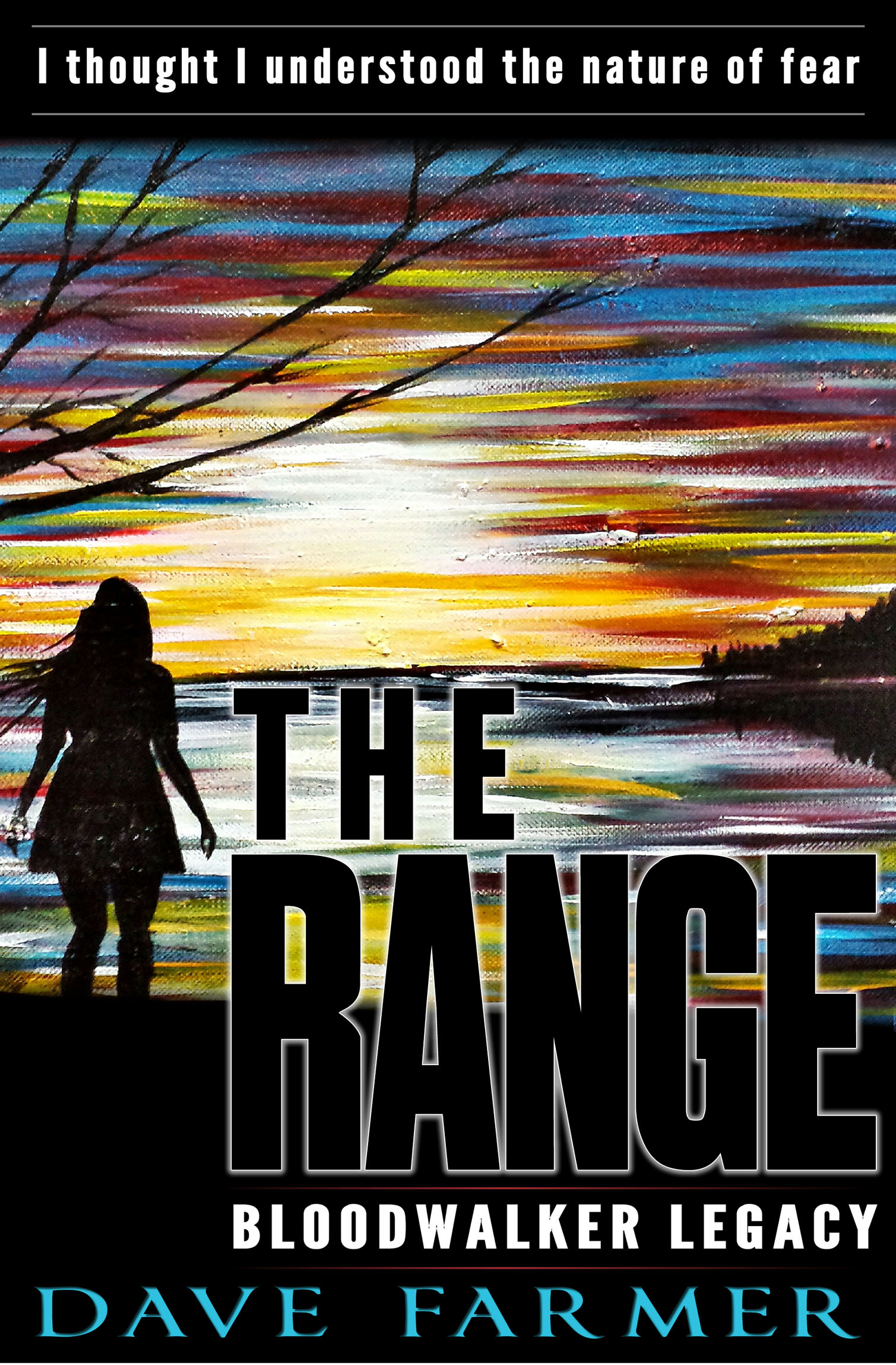
the range book cover FINALThe Range is available for purchase in both kindle and paperback format from Amazon.co.uk and Amazon.com.

Dave blogs at www.davefarmer.co.uk

Guest Blogger, Jennifer B Graham, talks about the birth of her memoir

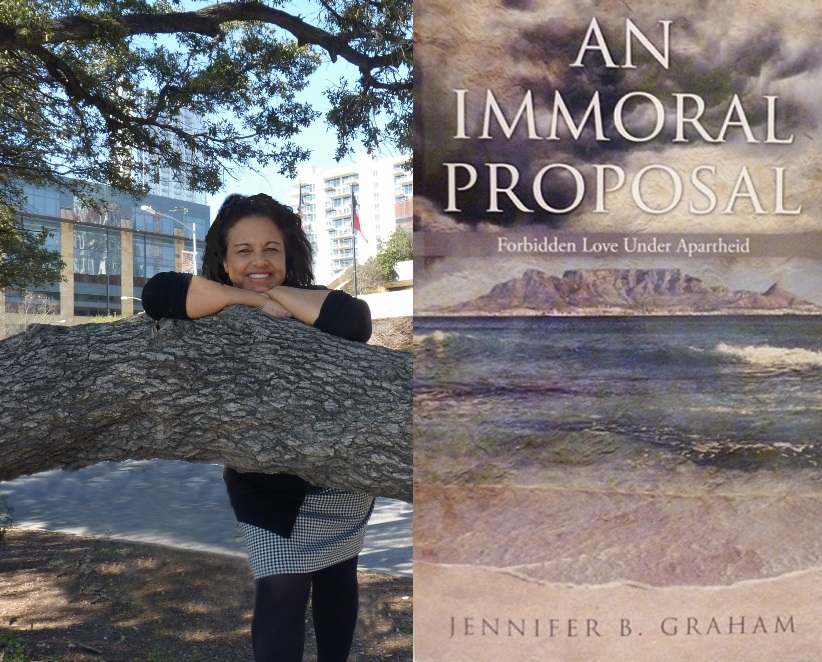
Jennifer B. Graham My memoir, An Immoral Proposal, started out as a novel. Its conception began in South Africa, as a forbidden, illegal love story played out against the backdrop of apartheid in 1974.

I approached my story as a novel because it was emotionally the safest mode to go. I felt I, the narrator, could be invisible. I thought all I needed was a vivid imagination and it would be like playing with the paper dolls I created as a child – over a hundred of them – each with its own personality and history. I’d breathe life into them and simply take off from there.

Trouble is, my story is not fantasy and facing the truth was simply too painful. So, in my re-ordered world, I set my family in a Pollyanna world with nice, clean characters.  But I wasn’t making any progress. It was like pushing a wheelbarrow of rocks uphill. The plot was garbled and the characters static and lifeless. Having no compass and not thinking clearly about what it is I really wanted to say, I was more focused on what I wanted to name the “baby”  – On the Other Side of the Fence.

I came to the realization my own story wasn’t one-dimensional but had multiple themes and working those out in a novel was a struggle. Along the way I changed the title to “Ham’s Daughter” but that still did nothing for the book. The whole project limped along in fits and starts leaving me highly frustrated and dejected.

Emotionally, I wrestled with sensitive subject matters in parts of my story, leaving me quite exhausted and depressed. Over the years, I kept putting the project on the back-burner while working through these emotions.  Just like you can’t force a butterfly from its chrysalis before it’s ready to hatch, you can’t rush the healing process.

I carried this ‘baby’ with me from country to country – England first, then Canada and the United States – all places I had lived. From the US, I took it to the ends of the earth – New Zealand!

In ‘The Land of the Long Cloud’, I made another last ditch effort to get this thing going. I asked a publisher friend to cast a critical eye over my novel. We spent a weekend at fabulous Hanmer Springs, a spa town near Christchurch.  Her response was, “Do you have a thick skin?”  She put it to me as diplomatically and gently as she could. It stank!  Looking back, I’m embarrassed to have even given her the material.

I refer to her as my literary mid-wife who told me the ‘baby’ was breech. She turned it around by suggesting that I tell my story as a memoir. “But I thought memoirs were for important public figures,” I replied. Anyway, I took her advice and once I began writing in this genre, the words simply began to flow as I tapped into my wellspring of memories and experiences.

Some were extremely painful and embarrassing to drudge up, but it forced me to confront my fears against which I had well insulated myself with layers of protective walls. Breaking them down was excruciatingly painful at times.

Three winters ago, I took my manuscript on vacation with me to the Dominican Republic where I made huge strides with it. It was there in the dreamy atmosphere of the Caribbean that the present title jumped off the page. After a twenty-five-year “pregnancy”, An Immoral Proposal was birthed on 9 November, 2013 and I’m pleased to say that, although the mother is going nuts with marketing minutia, the “baby” is growing quite well. tree pose Jennifer B. Graham is a self-proclaimed global nomad who began life in South Africa, left when she was 19 and since hasn’t looked back. She’s also lived in England, Canada, USA and New Zealand.

After earning her degree in communication/print journalism from the University of Mobile, Alabama, USA in 2001, she wrote freelance feature articles on topics such as food, health, travel and profiles for miscellaneous publications that include Destinations, Connections, The Press, The Citizen, The Fairhope Courier as well as Triond.com.

Jennifer is a member of the Writers’ Community of Durham Region. An Immoral Proposal is her first book. She lives with her husband near Toronto, Canada. Her five grandchildren split between Wilmington, Delaware and Regina, Saskatchewan, keep her wandering.

#

Sarah says: Thank you so much, Jennifer, for guest posting on my blog, and telling us about your fascinating and often painful journey on the way to writing your memoir. I’m sure that some of my blog’s followers who are working on their memoirs just now, will be greatly inspired by what you’ve achieved.

Wishing you all the best with your book and any future projects you have in mind.

January’s Guest Storyteller, David Milligan-Croft

David Milligan-Croft
David was shortlisted for the Independent on Sunday Short Story Competition in 1997. His short story, Woman’s Best Friend, also appears in the IOS New Stories published by Bloomsbury. His poetry has been widely published in Ireland, Britain and the US in anthologies and poetry journals. David is the author of six feature-length screenplays, a collection of short stories, a poetry collection, two stories for children, and his first novel, Love is Blood. He has just finished his second novel, Peripheral Vision.

Blog: http://thereisnocavalry.wordpress.com
Facebook page: https://www.facebook.com/thereisnocavalry
Love is Blood is available on Amazon.co.uk and Amazon.com

 #

Sarah says: Welcome to my blog, David, and thank you so much for being my first guest storyteller for 2015. This January is somewhat of a celebration, as it’s exactly a year since I began this  monthly guest slot, which started out as an experiment but has really taken off.

Below, you can read an excerpt from David’s latest novel, Peripheral Vision, about a young boy blinded by his father and his subsequent descent into a life of crime and drugs.

 #

When I came round, the smell of detergent seared my nostrils. I was looking up at a white, paint-peeled ceiling and a buzzing neon strip light. But something wasn’t quite right about this picture. As though I could only see half of it. Gently, I put my fingers to my left eye and felt soft fabric.

“Hey, here he is,” said my mother, in a voice as soft as the bandages. “How you doing, champ?”

I made a small smile but I felt very drowsy. There was a rakish ringing in my left ear and a burning sensation like someone had inserted a red-hot needle into the left edge of my eye socket.

“You’ll be right as rain in no time.” It was my dad’s voice but I couldn’t see him as he was standing at the left hand side of the bed. I saw my mum cast him a malevolent glance. I caught a glimpse of the side of her face. Her left eye was purple and yellow. She turned back to me and her expression immediately returned to one of radiance. Her beautiful long, black hair was tied up in a bun on the top of her head. She was a vision, my mother. Her cobalt blue eyes sparkled, glassy with tears. She reached out and took my right hand between her palms. They were warm and comforting.

“As soon as we get you out of here we’ll go off on a day trip. How does that sound?” she whispered.

It sounded fine, I thought.

“How about Blackpool? Or Bridlington? Which do you prefer? It’s your choice,” she said.

“How come he gets to choose?” It was Jed’s voice. I didn’t realize he was in the room.

“Oh, shut up!” Mum spat, as she turned to a space over to my blind spot. Is that it? Am I blind? I was trying to remember what happened. There was an argument, I think. Dad – moving fast toward me. My legs like jelly. Nothing.

“What happened?” My throat hurt when I spoke. Like I’d swallowed broken glass.

“It was an accident,” Dad said a little too swiftly.

There’s that glance again from Mum.

“You fell and banged your head on the sideboard,” Mum said.

Oh, yes, now I remember. “Dad hit me,” I slurred.

“No I didn’t!” he snapped. “You’d pissed your pants!”

A snigger from Jed.

“I shoved you to get you up to the toilet. And, and when you turned around, you slipped and fell.” This was Dad’s defence.

Perhaps it was because I couldn’t see him that I felt brave enough to defy my father, but something didn’t quite stack up in my confused mind. “If I turned to go upstairs wouldn’t I have banged my right eye on the sideboard?” I said, directing the question to my mother.

She smiled sweetly and closed her eyes in a slow, slow blink, inhaling deeply. When she opened them again they were cast toward Dad, awaiting a response, but none was forthcoming. I could tell by my mother’s smug expression that she was pleased with my question and the lack of response it had elicited from my father.

I spent three weeks in hospital while they monitored my fractured skull. Well, it was my eye socket really, but they classed it as my skull, which made it sound a lot more dramatic than it actually was. To be honest, I was glad to be out of the place. I had a numb bum from being in bed all day and there’s only so much jelly and ice cream a kid can eat.

#

You can find the links to previous guest storyteller posts at https://sarahpotterwrites.com/guest-storytellers-2/

December’s Guest Storyteller, Sherri Matthews

Sherri

Sherri is a freelance writer, published in a variety of national magazines, websites, and anthologies.  She is writing her first book, a memoir, and regularly publishes articles, memoir bites, flash fiction and poetry on her blog.  Having lived in California for twenty years, she now lives with her hubby, daughter and two cats in the West Country of England, where she walks, gardens and takes endless photographs.

You can connect with Sherri at

Blogwww.sherrimatthewsblog.com
Facebook Page:  https://www.facebook.com/aviewfrommysummerhouse
LinkedIn: http://www.linkedin.com/pub/sherri-matthews/60/798/aa3
Google Plus: https://plus.google.com/103859680232786469097/posts

Memoir Book Blurb: http://sherrimatthewsblog.com/memoir-book-blurb/ )

 #

Sarah says: Welcome to my blog, Sherri, and thank you so much for contributing a most poignant and seasonal piece of flash fiction. In Sherri’s words: “This is about a little girl’s discovery that she isn’t the only one in her family who is keeping secrets”.

#

Chocolate Umbrella 

Emma knew magic because Daddy made magic and she never stopped believing. Such magic that only he could muster, especially for his little girl, every Christmas Eve.

But today, while Daddy paid for their shopping, she stared in disbelief at the box of chocolate umbrellas on the shelf at the supermarket. Her chocolate umbrellas, the ones that fell out of the sky every Christmas Eve because of her daddy’s magic. How could this be?

On the way home, Daddy took her to the pub. “Don’t tell Mummy,” he said, with a wink. While he propped up the bar, let out bursts of laughter, and slapped the backs of drinking friends, Emma sat out of sight in a quiet corner with a bag of crisps and a glass of cola to keep her amused.

As she sat alone, she remembered last Christmas Eve, how Daddy had regaled her with stories of mystical creatures, of elves and fairies and how her eyes had shone with the wonderment of it all.

She remembered the flush of her cheeks as the burning coal in the fireplace cast its orange glow and how, with the lights off, she had been mesmerised by the red-hot ash of Daddy’s cigarette as it danced and made patterns in the darkness.

Then she had gasped with surprise as she heard a rustle and something fell from the middle of the darkness, landing in her open hands. Always a chocolate umbrella, conjured up just for her.

“Let’s go day dreamer.” Pulled away with a start from her memories, Emma looked up at Daddy. “Don’t want to miss the magic,” he grinned.

She stood up, smiling faintly. “I’m excited,” she lied, as she took his hand. She knew now there was no such thing as magic and she felt sad, but she played along, not wanting to hurt Daddy’s feelings.

That night, as a chocolate umbrella landed in her hands, she giggled as before and hugged Daddy but she knew things were no longer the same. Then again, she already had an idea that things had changed, ever since last week when she had seen Mummy kissing a strange man while Daddy was out at the pub.

The man had worn a Christmas hat, but Emma knew he definitely wasn’t Santa Claus.

© Sherri Matthews 2014

#

You can find the links to previous guest storyteller posts at https://sarahpotterwrites.com/guest-storytellers-2/

And guess what? Next month, it will be exactly one year since I started my monthly guest storyteller slot, but more about that in January! Meanwhile, a big thank you to my twelve brilliant guests for 2014 🙂

Guest Blogger, Uncle Spike: Change of Career, Continent, and Citizenship

For many years I was an avid traveller of far-flung places – basically, anywhere warmer and drier than the UK was my motto. I always favoured those warmer climes, and my passport collected stamps of places like Australia, Egypt, Tunisia, all over mainland US and Hawaii, New Zealand, China, Africa (north, east, and west), India, and much of the Near- and Middle East, plus most of Europe.

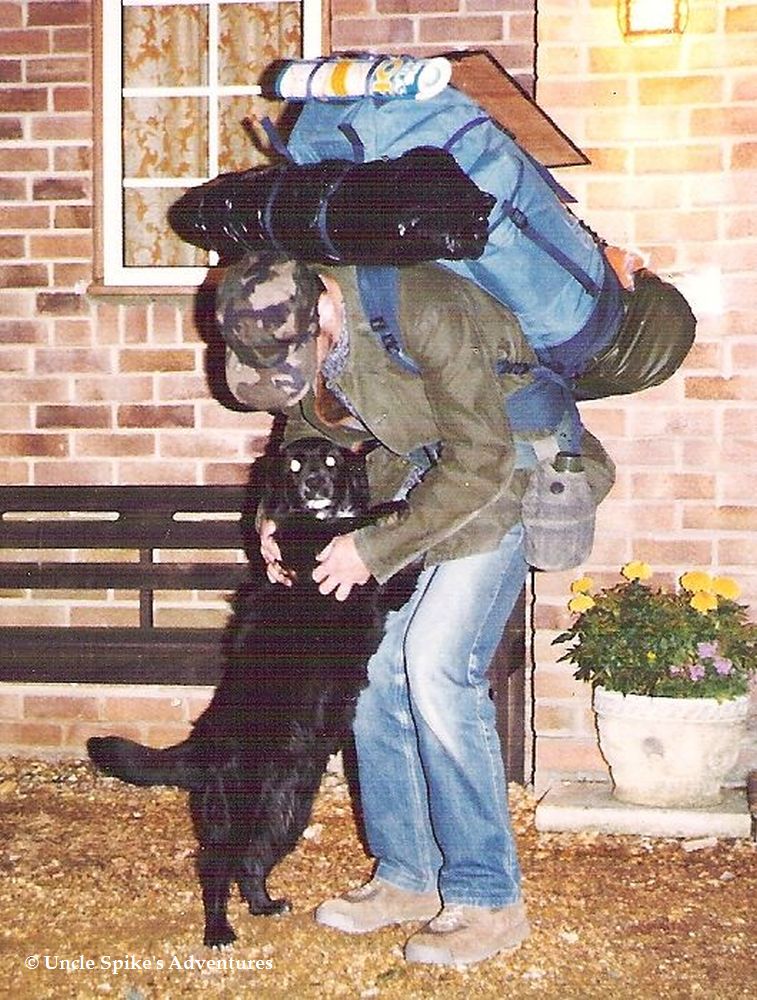
Now, I was no rich bitch cruising around on papa’s cash; just an ordinary guy in search of adventure. From the age of 12-13 saw me hitchhike, cycle and train travel much of the UK, before escaping by channel ferry in the early 80s following a bereavement and a subsequent engagement that had gone a bit skewwhiff. And so off I toddled ‘to find myself’ – dunno if I can say I ever did, by the way, but that quest kept me on the road for some three years.

Spike 01_blog

I then returned to the southern shores of dear old Blighty, and eventually settled down, got hitched and found myself stuck deskbound in a semi-respectable job in a bank (after a hearty dose of BS tendered to pass the interview). For the next 15 years or so I worked my up the greasy corporate ladder, ending up in the spotty-faced world of mainframe programming and IT management, way up in Yorkshire. Flat cap, dog, motorbike, and a hilltop stone cottage built c.1750 was the order of the day…. BUT travelling was still central to my agenda. Using all my annual entitlement, plus time-off-in-the-loo, my wife and I mustered some 5-8 weeks away on yonder shores each year.

Many times we came to Turkey; not to the touristy bits, but sampling rural village life, with eventual plans to retire early in such a place – doing what hadn’t even been considered at that stage. This mixed-up lifestyle continued for over a decade, forever working 60-80 hour weeks in order to travel in our spare time.

Spike 02_blog

Then life’s meaning changed.

My wife was called upstairs rather early by the big man himself, and the work/holiday lifestyle, the job, the plans… well, they all seemed a bit daft really. So faced with a crossroads (my life, not that soap with Benny), I decided to jack it all in and do something; I emigrated to Turkey, became a fruit farmer, remarried, became a middle-aged pop, naturalised as a Türk and then wandered into blogging

My life all seemed quite ‘normal’; until I wrote it down J

To summarise; my life’s guide very much aligns with the words of a certain seagull. The image that follows is a scan of an old postcard that I have had close by me for 30 years…

Spike 03_blog

Thanks for your hospitality Sarah J

UNCLE SPIKE

#

Sarah says: It’s my pleasure, Uncle Spike, and thank you so much for accepting my invitation to guest here.

As an avid follower of your most entertaining blog, Uncle Spike’s Adventures, it was great to learn more about the man behind the Turkish fruit farm!