The Good, the Bad, and the Ugly Sentences with April’s Guest Storyteller, Leigh Ward-Smith

Hiking&Etc. 012

This is a return visit for Leigh Ward-Smith as guest storyteller. In September of last year she shared the intriguing prologue to The Enhanced, her science fiction novel-in-progress.

Handing over to Leigh now, she’s going to tell you about what she has in store for you this month re the “best of the worst” microfiction (hence the title to this post) …

#

As a writer, it’s not often that you strive for an ugly sentence. Good, yes. Bad, no. But the yearly Bulwer-Lytton Fiction Contest (BLFC) http://www.bulwer-lytton.com/index.html seeks just that: your best worst opening line to a novel. Named for Victorian-era novelist Edward George Bulwer-Lytton—perhaps best-known as the bloke who came up with “It was a dark and stormy night,” and way before Snoopy the beagle, no less—the BLFC has evolved over the years to add more genres and permutations of awarded categories, including romance, Western, science fiction, children’s literature, and purple prose. The official deadline for your worst 50- to 60-word write-mare is April 15, although June 30 is the actual deadline. Consider constructing your gnarliest one-liner; Professor Scott Rice, the progenitor of the BLFC, proclaims that WWW stands for wretched writers (or, indeed, writing) welcome, so you’ve nothing to fear. Here’s mine:

In the Kingdom of the Kelpies, there was a particularly curious young seafoam-frothing foal who couldn’t figure out why the “bobbling legs things” were so taken aback when he surfaced; after all, he was a run-of-the-mill bioluminescent horse composed of saltwater and strings of green gloop that only wanted to plant wet equine kisses on their screaming, stretched surfaces then drag them down to the trenched graveyard of the sea with his oyster-shell teeth.

 #

Thank you, so much Leigh, for your contribution for this month, after receiving my invitation at extremely short notice.

Leigh Ward-Smith lives and writes vicariously–and humourously (she hopes, anyway)–through her two children, one husband, and six ducks. She also thinks it’s a very good thing those numbers aren’t reversed! Follow more of her work at Leigh’s Wordsmithery.

You can also find the links to previous guest storyteller posts at https://sarahpotterwrites.com/guest-storytellers-2/

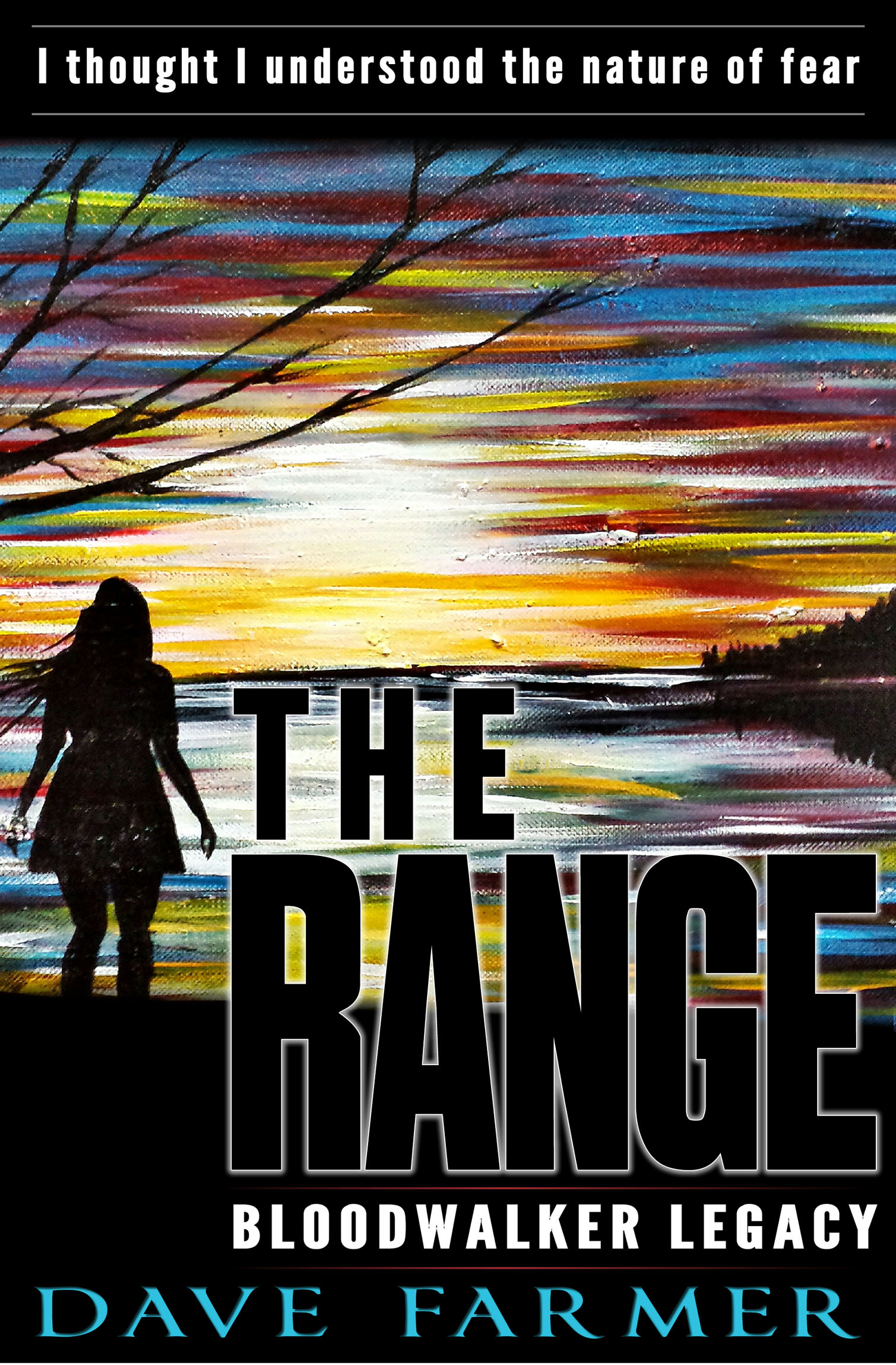
Yay, It’s Publication Day for Dave Farmer’s Novel, “The Range” :-)

the range book cover FINALNews breaks of a deadly virus in Asia but, despite fatalities, few people take it seriously.

Sheltered within the university bubble, Samantha and Louise are convinced the UK is invulnerable to this virus, until gruesome events unfold around the world and the death toll rises from hundreds to millions.

By the time the virus reaches England and students on campus start falling sick, Samantha has to weigh up the risks of travelling home to London. She decides to sit tight with Louise and wait for everything to blow over.

But the situation further deteriorates in ways the two friends couldn’t have envisaged. Their student flat is no fortress and there’s only one place they’ll be safe: The Range.

#

Hearty congratulations to Dave! Today, the Kindle edition of The Range (Bloodwalker Legacy Book 1) becomes available for purchase from Amazon.co.uk and Amazon.com. The print on demand version is available via CreateSpace and will be linked to the Kindle listing in 3-5 business days.

Some of you will remember Dave from his previous appearance on my blog as June’s guest storyteller, where he whetted our appetites with an extract from The Range. In that post, I described him as writing speculative type “what-if” fiction that concentrates on things such as courage, loyalty and friendship, but with an apocalyptic slant. Of course, this makes him very much a writer after my own heart.

Dave blogs at www.davefarmer.co.uk

The Writing Process Blog Tour

Barbara Monier has kindly tagged me to take part in the Writing Process Blog Tour. Barbara describes herself as an “author, novelist, cynical hopeless romantic”. She has two novels finished and published and a third on the way.NWWbegins
Thank you, Barbara, for thinking of me for this event.

Last week, I answered some set questions in my post for the Meet My Character Blog Tour, so you may notice a small amount of overlap in the answers below, but hopefully not too much.

1. What am I working on?

I’m taking the Summer off from writing, apart from haiku and tanka poetry, having recently completed my 90,000-word speculative fiction novel. This is my fifth novel and the outcome of a journey experimenting with various types of fiction. His Seed (or alternatively, Counting Magpies) is set in the 22nd century and its themes are male infertility, sexual exploitation, incest, love and romance, as measured against the yardstick of humankind’s threatened extinction. That all sounds very serious, but it’s not science-or remotely preachy.

2. How does my work differ from others in its genre?

I’ve always had a tendency to cross-genre. When I first started out, literary agents and publishers made comments such as, “This is really original and well-written, but unmarketable for a novice author” or “I really like this, but where would it go on shelves in bookshops?” or “I applaud your imagination, but comedy, fantasy, horror is just too much of a mix”. I heeded their comments and had a go at writing a straight genre medieval-style sword and sorcery fantasy novel, which had so many full reads and near-misses, I finally flung my hands in the air in despair and declared (I’ll quote Monty Python’s Flying Circus here ) “And now for something completely different!”

To me, speculative fiction is the new respectable name for cross-genre science fiction or fantasy; although some purists will scold me for saying this. Having consciously applied the speculative label to my work, I’ve felt compelled to write in a more literary style than before. I acknowledge that there’s some exceedingly literary published science fiction and fantasy out there, but such works can be sadly overlooked by readers who look down their noses at genre novels.

As far as the finished product goes, it is definitely more literary and lyrical than my other novels, although quite minimalist in style compared to other works that are considered literary. It also breaks away from the urban nightmare often portrayed in Dystopian fiction, instead depicting a future in which nature has started to regenerate without so many people around to rape its resources.

3. Why do I write what I do?

Normal is boring and I just don’t feel driven to write about everyday things. Of course, it’s impossible not to include them in a novel, or readers would have no frame of reference to draw upon, but I’ve always loved “what-if” novels set in the future or in a fantasy kingdom. You see, I’m not very adventurous myself in real life; on the other hand, my imagination is huge and extremely adventurous. Up to the age of thirty-six, I daydreamed during every spare moment. Then I decided to write my first novel and pour all those daydreams into something more constructive, rather than releasing them into the ether. The first draft of my first novel — a time travel romance — received a publisher rejection containing the word “promising”, which was sufficient praise to spur me on; although sometimes I still blush at the memory of sending out an unedited first draft to a publisher.

4. How does my writing process work?

Writing straight on to the computer, I start with one or two characters in my head and perhaps write a piece of flash fiction or prologue about them, just to fill the blank screen with something. It’s all about calling my brain to order and dialing up my literary muse. This starter stuff usually ends up being dumped in the second draft. Having got underway, I soon come up with some kind of emotive and perilous situation into which I throw my characters. From thereon in, the world blossoms around them, new characters unfold and, before I know it, my fictional characters have taken over telling the story, throwing up the most wonderful surprises along the way. Usually the end of the novel comes to me, somewhere past the halfway mark.

I used to write in a linear fashion and then go back to weave subplots in with subsequent drafts. With my latest novel, I wrote from six different character viewpoints, weaving in flashbacks as I went, which required an awful lot of concentration. Normally, I don’t plan a plot or make any notes, but hold everything in my head. This time I admit to having had to stop a third of the way through the novel to construct a family tree/timeline.

I carry out research on the trot, as and when it’s required, and rarely suffer from writers’ block. If my brain won’t work, it means I need to take a break and do something completely different. I tend not to write at the weekend or in the evenings.

#

I’m now pleased to pass the baton on to two of my writing buddies …

Benjamin Jones, otherwise known as Graphite Bunny, whose blog is full of wonderful photography and prose poetry, and who was my guest storyteller on this blog back in March.

Henry Gee, who blogs at cromercrox.blogspot.co.uk about all manner of things that catch his attention: some of them quirky and some halfway normal. He’s appeared twice on my blog: first, in November for an interview about his then self-published novel “By The Sea” and then a week ago in a post about his success in finding a traditional publisher for the same novel.

Blondeusk, who calls her blog Blondewritemore and describes herself as “a novice writer starting her journey”.

Dave Farmer, who blogs at davefarmersblog about life, writing, and zombies(!), and who was my guest storyteller on this blog in June.

#

And here’s the link to Henry Gee’s “Writing Process Blog Tour” post.

Meet My Character Blog Tour

Andrea Stephenson at Harvesting Hecate has kindly tagged me to take part in the Meet My Character Blog Tour.

Andrea, a pagan by inclination, blogs about nature, the coastline and the turn of the seasons, all of which she sees as a source of great inspiration to her creativity as a writer and painter. Whenever I visit her blog, I come away feeling both soothed and uplifted.

Thank you, Andrea, for thinking of me for this event.

Now it’s my turn to tell you about the main character in my completed 90,000-word speculative fiction novel.

1. What is the name of your character? Is he/she fictional or a historic person?

His name is Anna and he’s fictional.

2. When and where is the story set?

Anna is born in AD 2166 and the story is set in what we know as the British Isles. It begins in Dorset, England, and then Glen Affric in the Highlands of Scotland, but the main block of action takes place in the independent state of Wightland (previously the Isle of Wight). There is also back story revolving around Warsaw, Poland, and its criminal underworld.

3. What should we know about him/her?

He’s a rare specimen in a world populated by women and, for the unscrupulous, a prize worth capturing and exploiting. At the start of the novel he’s a sweet, honest, nature loving boy who believes he’s a girl. As the story progresses and he learns what being male means in a world run by women, he turns into an archetypal moody and manipulative teenager who discovers music and finds some solace in this. The few people who care about him, are also partly responsible for his disillusionment and must work hard to prove they’re worthy of his trust.

4. What is the main conflict? What messes up his/her life?

The main conflict is related to his uniqueness and his exploitation by a deluded criminal/quack geneticist. His life is messed up in the first place by his discovery that he’s a boy.

5. What is the personal goal of the character?

Freedom to choose his own mate, rather than have multiple mates chosen for him, and ultimately to escape back to the wilderness from whence he came, taking with him the people he’s learned to love and trust.

6. Is there a working title for this novel, and can we read more about it?

This novel, which is now finished, has had many titles. In the first draft it was called Eulogy to the Last Man which, for reasons I won’t disclose, was rendered redundant. In the second draft it was Wightland, and the third Counting Magpies. In the final draft it’s His Seed, although I still quite like Counting Magpies and have called it this in one of my submissions, just to confuse issues. And no, you can’t read more about it, as I don’t want to give the whole plot away.

7. When can we expect the book to be published?

As I’m going down the traditional route and throwing myself upon the mercy of agents and publishers, I can’t answer that. All I can say is that I hope it happens in my lifetime.

#

I’m now pleased to pass the baton on to three of my writing buddies …

Benjamin Jones otherwise known as Graphite Bunny, whose blog is full of wonderful photography and prose poetry, and who was my guest storyteller on this blog back in March.

J.S.Watts, whose website you might like to check out, and who blogs via Goodreads , approximately monthly, but sometimes less frequently and mainly about things writerly (both fiction and poetry).

Henry Gee, who blogs at cromercrox.blogspot.co.uk about all manner of things that catch his attention: some of them quirky and some halfway normal. He’s appeared twice on my blog: first, in November for an interview about his then self-published novel “By The Sea” and then a week ago in a post about his success in finding a traditional publisher for the same novel.

Blondeusk, who calls her blog Blondewritemore and describes herself as “a novice writer starting her journey”.

Dave Farmer, who blogs at davefarmersblog about life, writing, and zombies(!), and who was my guest storyteller on this blog in June.

#

And here are the links so far to the posts of those I’ve tagged:

Dave Farmer

J.S. Watts

Blondeusk

Henry Gee

June’s Guest Storyteller, Dave Farmer

davefarmer

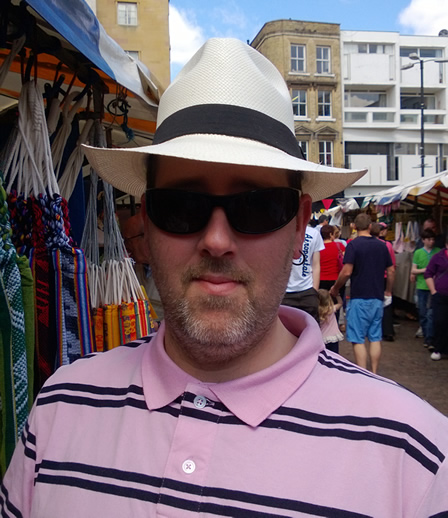
Dave Farmer escaped the crowded industry of the West Midlands, England, and enjoys the big skies and open country of rural Cambridgeshire every day. Although his Midland accent has softened he still refuses to pronounce it ‘parth’ and ‘barth’ because it doesn’t feel right in his mouth.

When not writing, he resumes the hunt for the perfect sandwich, plays with the family dogs, and discusses how to survive the end of days, should it ever happen.

To find out more you can read posts on his blog, www.davefarmer.co.uk, where he shares his thoughts and ideas of the world around him.

And yes, Cambridge is as posh as everyone thinks.

 #

Sarah says: Hi Dave, thank you so much for guest storytelling this month. I’m a great fan of your blog: especially your wry observations re human behaviour, as well as your scarier stuff about zombies and the like.

For those of you who aren’t already followers of Dave’s blog and are unfamiliar with his work, he writes speculative type “what-if” fiction that concentrates on things such as courage, loyalty and friendship, but with an apocalyptic slant. Below, is a short extract from his novel-in-progress.

Extract from The Range & Chapter 2 called 2.47

When the video started, the footage was blurred and shaky.

Trees lined a busy intersection. Traffic chugged around pedestrians as they crossed the road. After several seconds of watery blue sky, the sun low on the horizon, a pale-faced kid with chubby cheeks filled the screen. He grinned then panned the camera over a statue of a naked guy stood next to a horse.

‘Lou, that’s Pont d’Iena, right next to the Eiffel Tower. We went there on a school trip, remember?’ I glanced up at her. ‘Sure Denise sent the right link?’

‘Yeah, keep watching.’

After half a minute I clicked pause. ‘Seriously, Lou? This is boring. Denise must be laughing her arse off.’

‘She says it happens at two forty seven. Play it.’

We watched more footage of trees and people talking into the camera – two girls around five or six years old with, who I assumed were, their parents taking pictures with their phones. The sound was choppy and out of synch. I tried to change the quality with the controls below the video but it was stuck on 360p.

It happened before then. I don’t think anyone else spotted it. The younger of the two sisters wore a sleeveless yellow dress with white lace around the neck. Her long brown hair was woven into two neat plaits tied with wispy pink ribbons.

She began to fidget and her bottom lip quivered. She reached up to grab her mum’s hand. Her eyes widened before she buried her face against Mum’s hip. At 1.31 the camera panned around.

Crowds rushed across the busy intersection. A FedEx truck slammed into a small group of children. The impact knocked them into a surge of screaming tourists.

No one stopped to help them.

The camera jolted and swung as people were swept down the road. Half way across the bridge the chubby kid stopped. The camera angled down and appeared to lift off the pavement. A head appeared and two arms reached up. Traffic slowed to a crawl, an orchestra of horns wailed like sirens of panic. In contrast to the solid Eifel Tower the crowd beneath it moved in waves. Large groups split and reformed, a tsunami of screaming people hemmed in by the bridge. Dozens were forced over the side before a gap opened in the stampede.

This new wave showed no signs of panic or fear. At the centre of the group a man in a blood soaked shirt jerked upright and collapsed. Blood pumped from deep lacerations on his neck and his right forearm was missing.

Behind him two teenagers with bloody faces carried between them what looked like the survivor of a tiger attack.

At 2.47 the camera focussed on a young girl. Her dainty yellow dress was smudged with dirt and drops of blood. A plait had lost its ribbon. Frayed hair floated in the breeze. One arm was raised to grip a hand. The rest of her mum had been left behind. The girl turned and stared at the camera with milky yellow eyes.

I felt Louise’s hand clamp down on my shoulder.

The girl had no throat. She opened her mouth once or twice before moving off with the rest of the crowd, still holding the hand.

My other flat mate, Karla, threw back her chair and puked into the sink.

‘Turn it off.’ Louise’s voice sounded a million miles away.

My hand on the mouse wouldn’t respond.

‘Sam.’

Louise slammed down the laptop screen.

The touch of her steady hand on mine made me jump.

I couldn’t stop trembling.

I looked at my friend’s white faces and knew they too could smell fear’s foul breath.

 #

You can find the links to previous guest storyteller posts at https://sarahpotterwrites.com/guest-storytellers-2/