 Mermaids, museums and murder are just some of the ingredients in Henry Gee‘s gothic horror crime novel By The Sea — a book that has earned him a decent number of five-star ratings on Amazon and Goodreads. He really knows how to paint a vivid canvas with words and, personally, I loved everything about his novel: its characters, setting, fast-paced plot, mystery, and suspense.
Henry and I chatted about his book and how he came to write it. His answers to my questions make fascinating reading, which is why this post is longer than my usual 🙂
SP: In five sentences or less, how would you describe your novel By the Sea?
HG: Following horrific bereavement, Detective Inspector Persephone Sheepwool of the Met flees London for the quiet seaside town of Deringland, on the remote North Norfolk coast. But when the bodies start falling at the shadowy Lowdley-Purring Institute, whose inhabitants are dedicated to finding the secrets of the Sea, Sheepwool finds that horror has a way of catching up with her. Even with the practically minded Detective Constable Elaine Fitch to help, Sheepwool finds that some secrets just don’t stay unburied. That’s three!
SP: For any reader of By the Sea, it is obvious that you have a scientific background. Do you agree with the conventional wisdom that fiction authors should write about what they know?
HG: Up to a point. I think it’s important to get details right, inasmuch as one can, especially where they are important to the story. If you can’t have the details, you have to employ a judicious vagueness. For example, the novel is set up as a detective story, at least to start with, but I know nothing at all about how the police do their jobs. And although I am a scientist by training, I know rather little about the details of molecular biology – I was a palaeontologist, a botherer of bones. This aspect, though, allowed me to get a good feel for museums. I’ve always been fond of the more old-fashioned kind of museum, the kind that grew out of the ‘cabinet of curiosities’ of eccentric Regency or Victorian gentlemen. Museums whose collections are haphazard, with all kinds of objects of uncertain provenance mixed up together, to create unusual, almost surreal juxtapositions. I’ve haunted such museums since my childhood – the first museum I ever visited, as a very small child, was the Horniman in South London, which is still very much like that. During my years as a graduate student I visited strange and wonderful museums up and down the country in which you might find all kinds of things in odd corners, casually stuffed onto shelves or propping the doors open. Efforts to modernise such museums, make them more ‘relevant’, almost never work. Parts of the Lowdley-Purring Institute are modelled after at least one real museum. No, I’m not telling you which one. But most of it was dreamed up anew, presumably from a multitude of influences each too small to isolate. I have recurring dreams about large, labyrinthine and rather spooky buildings.
SP: As a paleontologist, evolutionary biologist, senior editor of the scientific journal, Nature, and author of numerous science books that sometimes challenge the status quo, do you feel that when writing fiction the onus is upon you to be extra meticulous about facts, as well as maintaining an internal logic to your story?
HG: Yes. And then again, no. What I have found about science is that the more you find out, the less you know. Everything I’ve written, whether fiction or nonfiction, seems infused with the idea that science is not about knowledge and facts, but ignorance and doubt. If this sounds surprising, consider the day-to-day routine of my day job as an editor at Nature, which is to read scientific papers sent from all over the globe describing new knowledge, some of it surprising, bizarre, even horrifying. And because Nature is one of the most visible and highly read journals in the world, scientists want to send their best and most surprising research there. So, every day, I am forced to confront the very edge of the clifftop of knowledge and look over the edge. I am very lucky. Very few people get to do this. I reject nine out of ten scientific manuscripts that hit my desk. As a consequence I probably know more surprising secrets than the average spy. A very small amount of this ends up as public knowledge, written about in newspapers, even less gets discussed on TV. So, where most people see what seem to be irrefutable facts, I see a thin varnish covering an abyss of doubt, ignorance … and possibility.
As for internal logic – yes, that has to be maintained, not so much as a matter of scientific credibility but for the necessary suspension of disbelief all readers require. Even if many elements in the story are fantastic, they still have to hang together. For example, I spent quite a lot of time working out the complex semi-parasitic life-cycle of mermaids, making sure that it remained consistent despite the twists and turns of the plot.
SP: By the Sea crosses the genres of mystery, crime, horror, fantasy, and gothic fiction. Is this why you chose to self-publish this novel rather than submit to traditional publishers, who are forever mindful of books fitting neatly into a category? Do you believe that traditional publishers might one day force themselves out of business by sticking to such narrow criteria?
HG: As with all such things, the novel grew out of a rather disparate set of circumstances. I’d been a professional writer for about 15 years when I realised that I could hardly call myself a writer unless I had at least tried some fiction. So I sat down and wrote a huge SF novel. I wrote 125,000 words in three months. During this adrenaline rush I’d be up until 3 some nights and still go to work on a high. Finishing it was exhilarating. Of course, I thought it was wonderful, but like most novice novelists, I failed to realise that it was just the first draft, and would take a lot of hard work before it could be let out of doors on its own.
My agent tactfully suggested I shelve it and instead try what she called a ‘puzzle’ book, using my scientific knowledge and love of arcane riddles. “Like Dan Brown, only better,” she said. That’s when By The Sea was born. The experience of writing my embryonic SF novel showed that I was fine at characterisation, action and dialogue, but needed to work on pace and plotting. So I asked my friend Jennifer L. Rohn – a working scientist and published novelist – if I could write it for her LabLit website (www.lablit.com) as a weekly serial. After all, I said to myself, if it worked for novelists such as Dickens and Trollope, it might work for me. It would help me keep the pacing even and the plot tight. Jenny kindly agreed, and I delivered the book to her chapter by chapter. Although I was usually a few chapters ahead of publication, the beginning of the novel was appearing online before I had finished writing it. It helps that Jenny is a terrific editor as well as a writer, so the book got tighter still before it hit the screens. If that wasn’t enough, Jenny runs an occasional science-in-literature book group at the Royal Institution and By The Sea was the featured book for one of the meetings.
After the serial finished, I delivered it to my agent, but I think she found it a bit weird – as you say, somewhat of a genre-bender. So she agreed that I could self-publish it. You can get it as a print-on-demand paperback (on Lulu) as well as for Kindle. To be fair it hasn’t sold many copies – I’ve given many more away than I have sold – but that’s fine. Obviously, I’d love it to be a bestseller, but the people who’ve read it seem to like it, on the whole, and if it weren’t for self-publication it wouldn’t have seen the light of day.
There was a happy ending for my SF novel, too. Every so often I’d take it out of the bottom drawer and play with it. It turned from a single long novel into a trilogy, and after some years it was in a pretty decent state. Andrew Burt, a fan who’d seen and liked the draft when I’d loaded it up on his free fiction website, turned up years later as a small-press publisher in his own right. Andrew asked me if it was still available, so that’s published too, as The Sigil. Like By The Sea, there’s a lot of science (archaeology this time) and its confrontation with the unknown. Also, like By The Sea, the main protagonist is female.
SP: Pickled Lily, the mermaid, is of pivotal importance in your novel, as are some of the hybrid Victorian curiosities housed at the Lowdley-Purring Institute. In amuses me, that in your work as a scientist, you have openly rejected the “aquatic ape theory of evolution”, and yet choose to write about marine-animal/human hybrids in your fiction. Are you just letting down your hair here and having a bit of fun, or do you think that something genuinely scientific lies behind the legend of mermaids?
HG: The mermaids are there purely for fun – they are not meant to be taken seriously in the ‘real’ world outside the novel. However, as you’ll have guessed, there’s a certain ambiguity about all the stuffed mermaids we meet. Some are obviously very bad fakes. Others look disarmingly real. I don’t want to give anything away, but that ambiguity is a key part of the big reveal – an ambiguity that acts as a focus, for me, for the whole novel, and for the pursuit of science as a whole. Scientists can only ever look at one tiny piece of reality, and even then under very carefully controlled conditions. What they think they have found, as a result of their experiments, might not say anything much at all about the vastness of the unknown.
SP: Your central bad guy, Morrison, who’s in charge of the Institute, is obnoxious and driven to the point of derangement. He selects the beautiful Dr Alex Beach as his researcher, to then use as a sex toy with which to satiate his lust. His chauvinism, control freakery, and violence towards her is something to behold. Often, authors construct their fictional characters from people they’ve come across in real life: they get away with this by constructing a composite character based on several people rather than one. Does chauvinism still exist in the scientific establishment, and is Morrison purely a creature of your imagination, or an extreme pastiche of people you’ve met? (No names requested, of course.)
HG: After I drafted the novel which eventually became The Sigil, one of the comments I got was that all my characters were too ‘nice’. That’s why, when I started to plot By The Sea, I decided to create an out-and-out villain, and Morrison was the result. Yes, he is a creature of my imagination, but based, to begin with, on the ‘suits’ – the kinds of the people you only ever see in boardrooms, or on trains speaking far too loudly on their mobile phones and reeking of cologne, and who talk entirely in bullshit bingo – forever running things up the flagpole, thinking outside the box, pushing the envelope and so on. I have resolved never to use the word ‘hate’ about anyone or anything, because real life rarely admits of such absolutes, but I really, really, detest people like that. So, yes, Morrison is, as you put it, an extreme pastiche of people like that.
However, I’m sorry to say that such chauvinism is very much alive and well in the scientific establishment. The tales female scientists, colleagues and friends have told me about the behaviour of some people, especially at conferences, beggars belief. Morrison takes that behaviour to a violent extreme – but the more I learn, perhaps his behaviour isn’t as extreme as one might imagine. Morrison’s internal monologue, for example, is relentlessly sexist.
But even Morrison has a crumb of goodness and reasonableness. He is indeed charged with the impossible job of saving the collections in the Lowdley-Purring Institute. And one might imagine that when he started his scientific career, his principles were as idealistic as those of any young scientist. I do not wish to exonerate him, but he’s a prisoner of his circumstances as much as Alex Beach or Inspector Sheepwool.
SP: It’s almost a tradition in thrillers to have an evil corporation or company behind the scenes controlling events for the worse. In By the Sea, you have Magus Pharm who are out to trawl the sea for new drug discoveries. And Dr Beach is at the Institute to investigate a “small and utterly obscure group of microscopic marine worms called carnostomids”. As a scientist, do you believe that our oceans contain all manner of yet undiscovered cures for our illnesses? What are your views on marine conservation versus technological and scientific progress?
HG: The Earth has far more ocean than land, and there are parts of the ocean floor we know less well than the surface of Mars. There are sea creatures that can do amazing things, such as distil the metals nickel and vanadium from seawater. It’s a fair bet that there’ll be some that contain useful natural products. And if history is any guide, there’ll be people sufficiently unscrupulous to exploit such things for profit and damn the consequences. Carnostomids, though, are precisely as fictional as mermaids.
SP: You’ve expressed an interest in resurrecting your female detectives, DI Sheepwool and DS Fitch for a possible sequel to By the Sea. Would you say these are your two favourite characters in the novel? If so, as you were writing, did you feel as though you were primarily writing a detective story?
HG: Elaine Fitch is definitely my favourite character – she’s the only one who’s normal. The name ‘Sheepwool’ came from my elder daughter, who has a knack for coming up with bizarre names. She expressed a desire for a story featuring an Inspector Sheepwool, so the character was born. She also came up with the name of the pub, the Dazed Haddock – complete with the pub sign. I haven’t allowed my daughters to read By The Sea though, for obvious reasons.
I modelled Sheepwool explicitly on Colin Dexter’s Inspector Morse and Sergeant Lewis. Like Morse, Sheepwool has a troubled past, and she’s knowledgeable about an aspect of the arts. For Morse it’s opera, with Sheepwool it’s surrealist art. Like Lewis, Fitch is the down-to-earth one, the one who likes to drive, and have egg and chips for tea. With that in mind, I wanted to write a detective novel. It didn’t quite turn out like that, though. Whatever By The Sea is, it’s not a conventional police procedural. I don’t think my mind is sufficiently tidy, disciplined or devious for the kind of plotting that such things require. I’m not at all sure that Sheepwool and Fitch actually solve the case, or even if there is a case to solve. They think they are, but they are dancing in the thin skin of what they think is knowledge that’s stretched thin across an abyss of the unknown. So it’s less a detective story than a gothic novel that happens to have detectives in it.
SP: For me, your attention to detail and setting are first-rate. Your writing is evocative, lyrical, and vivid. As I read By the Sea, I could almost smell the Norfolk air, feel the mist creeping around me, taste the salt, hear the waves, and see the greyness punctuated only occasionally by specks of sunlight. Many modern novels shy away from too much description or use of rich language. Do you see this insistence upon simple language as a dumbing down to suit lazy readers?
HG: Thank you – you are very kind. I wanted to do for Cromer, the place I call home, what Stephen King did for Maine. It’s very easy for me to overdo the flowery language, but I felt that was an essential part of the gothic feel of the novel. I remember going to see Kenneth Branagh’s Frankenstein at the cinema. Apart from one scene, it was a very faithful evocation of Mary Shelley’s novel, but almost everyone I knew who’d seen it complained that it was over the top, and far too long. But that’s the whole point, I’d say – it’s gothic. It’s supposed to be over the top and far too long. They just didn’t get it. Now, writing concisely is a virtue, and when I advise scientists on how to write well, I always point them to Jane Austen, who was a master of subtlety and economy. Perhaps because Austen detested the gothic – witness the literary tastes of nice-but-dim Harriet Smith in Emma, and the gothic send-up that is Northanger Abbey — the literati have been conditioned ever since to equate gothic with trash. It’s still easier to write at length than with brevity, but the trick with gothic is to keep it away from becoming either self-parody or camp.
SP: I know that you are a huge fan of JRR Tolkien, or you wouldn’t be editor of Mallorn, the official Journal of the Tolkien Society. In what way has this great author, and others, influenced your writing? Do you read widely across all genres, or tend to stick to one or two?
HG: I admit it – I like Tolkien, though I have just stepped down from the editorship of Mallorn after eight years. I’m not sure how much Tolkien has influenced my writing, though. Neither am I convinced that it’s always a simple thing to detect one’s influences. If I’m influenced by anyone, it’s the Argentine essayist Jorge Luis Borges. He had a few things to say about influence-spotting – which is the kind of nice irony Borges would have appreciated.
#
Henry Gee has been on the staff of the science magazine Nature since 1987. His latest book is The Accidental Species: Misunderstandings of Human Evolution, just published by the University of Chicago Press. His blog The End Of The Pier Show (http://occamstypewriter.org/cromercrox) continues to delight its three regular readers. That’s where you can find all the details about his books and other activities. He lives in Cromer, Norfolk, England, with his family and numerous pets.
http://www.flickr.com/photos/27848370@N04/2620396861/
http://www.flickr.com/photos/27848370@N04/8561356930/
http://www.flickr.com/photos/27848370@N04/8204061932/
http://www.flickr.com/photos/27848370@N04/8132895286/

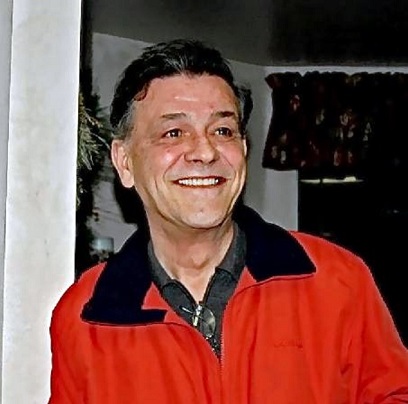 I. J. Sarfeh was born in Tehran, Iran, to a Persian father and Russian mother. When he was nine years old, his parents sent him off to an English boarding school — he believes they thought the British system would correct his unruliness. After spending the formative years there, he and his family moved to America, where he studied medicine, became a board-certified surgeon, and ended up on the faculty of the University of California. In 2000, he retired as Professor Emeritus to pursue his original passion before being lured into medicine: creative writing. So far, he has written eight novels, most of which are in the medical mystery/suspense genre. He changed genre for his latest novel, Beyond the Third Garden, which draws on his experiences during the childhood and formative years, which were far from ordinary.




 Sarah Potter Writes