


After a long battle with snails this year, for once I caught them doing something useful.
Every year, an ancient apple tree drops inedible apples on my patio at the top of the garden. These apples are huge Bramleys that rot, even while they’re on the tree; a tree that’s gradually dying but I haven’t the heart to cut down.
When my dog was a puppy, she used to like playing with the apples and I dreaded her chomping on a lurking wasp by mistake. On countless occasions I’ve almost twisted my ankle on apples or skidded on their slushy remains in the rain. I can’t sit at the table on the patio in the wind without wearing a tin helmet. They jump like bouncing bombs across the lawn, requiring picking up before mowing the grass. And for all their sins, not a single apple pie to be had.
Hopefully, the baby apple tree at our allotment will produce its first yield of Cox’s this year. Meanwhile, perhaps I should transport a bag of rotten Bramleys there to keep the snails off our vegetable produce. On the other hand, perhaps every snail within a mile would head to our plot for the chance of a squidgy apple feast.
To check out my earlier posts involving snails and slugs, you’re welcome to follow the slime trail @~@~@~@~@~@~@~@~@~@~@~@~@~
The Allotment into its Fifteenth Month
Wordless Wednesday: Mr Slow Worm, the Garden Hero that Eats Slugs
Wordless Wednesday: Garden Demolition Expert

Back in September 2012, Mister and I inherited our allotment. To mark this event, I wrote a haiku and posted this picture.
An old allotment
awaiting transformation.
Next year, fruit and veg.

And this was what it looked like the following Spring, with all the ground dug and seeds planted.

Followed by a bountiful summer of vegetables and a noticeable reduction in our food bills; although we didn’t have much fruit in the first year, apart from rhubarb. Below, is a picture of a typical weekly harvest in late summer.
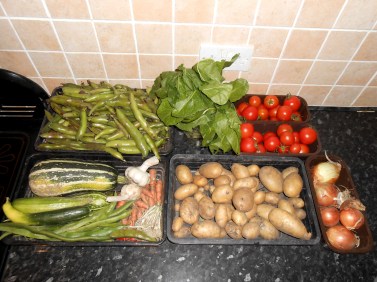
September harvest.
Produce packed with goodness:
bounty of the earth.
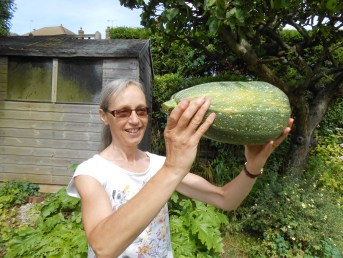
And for anyone who hasn’t seen the picture of the giant marrow, here it is in all its glory (grown without fertilisers or artificial chemicals of any kind).
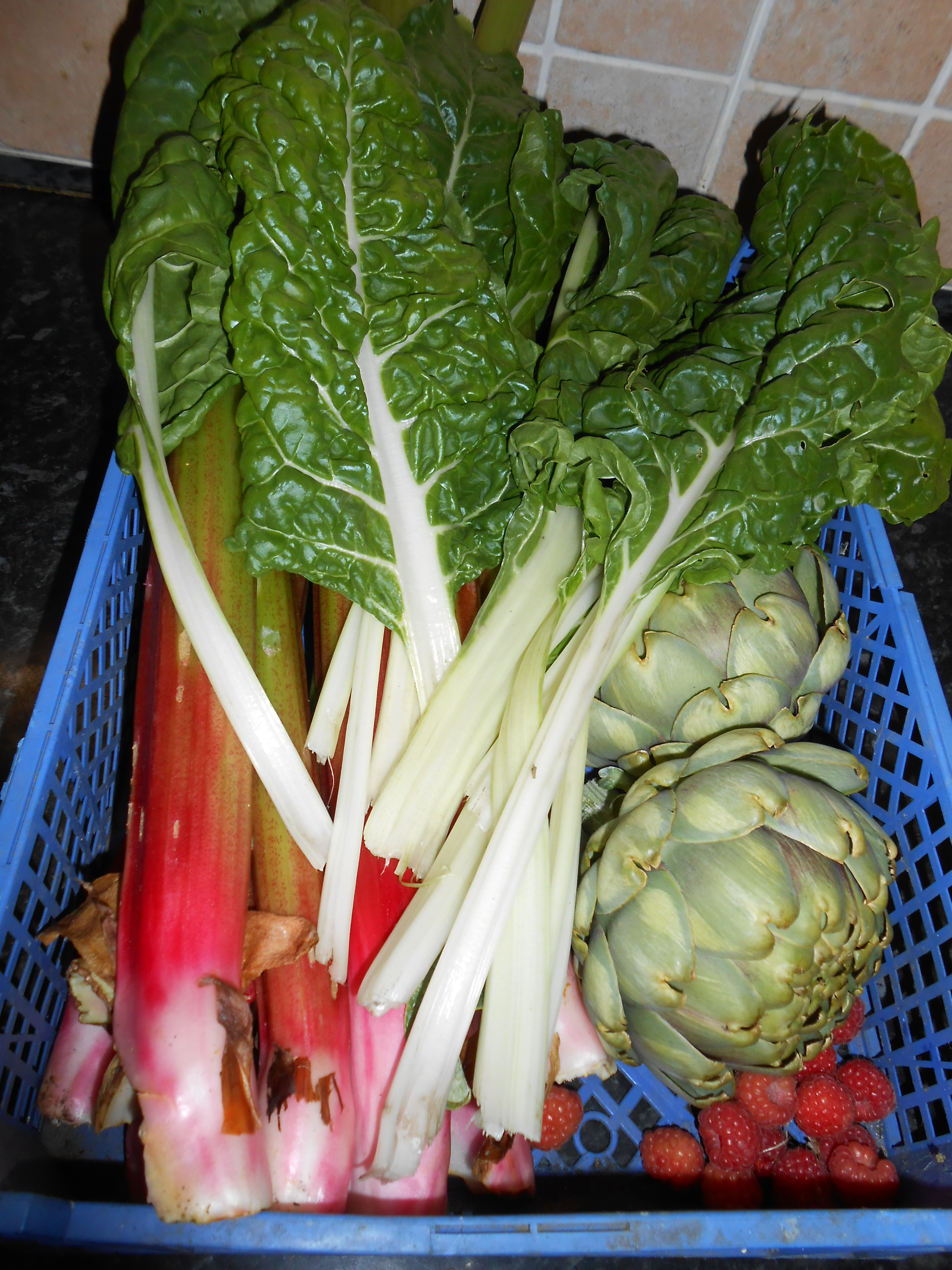
So far, on the vegetable front this year, we’ve had spinach, potatoes, globe artichokes, and lettuce. There would have been a greater variety of things but we lost a whole load of seedlings to slugs and snails, with us finally resorting to beer traps. Birds had a go at the seedlings, too, when they’d have been better employed pecking away at gastropods.

Fruit-wise, we’ve had far greater success, with the usual rhubarb and a decent crop of huge, not-to-sour gooseberries, strawberries, and raspberries. In fact, for the last month, I’ve had strawberries or raspberries with my breakfast every morning and they’re so much tastier and sweeter than those sour shop-bought ones. Mister commented that he’d seen a small punnet of strawberries on sale for £3.00. From this, he concluded that we’ve paid for our allotment for the year from what we’ve saved by growing our own fruit.

Over the next couple of months, we’re expecting bumper harvests of all sorts of other goodies, so look out for regular allotment updates.


Oh, master of the allotment! See the pride on his face. The photograph below was the respectable one, taken after he’d settled down a bit and stopped behaving like a naughty schoolboy (they never grow up, do they?). The rude photo is going on Facebook for private viewing, where a degree of allotment banter already occurs.

Until a fortnight ago, I’d never cooked or eaten globe artichokes. For anyone who’s never tried them, they’re worth the effort. First, cut off their stems level with the bottom of the globe. Second, trim the tips of each leaf as they’re a bit spiky and you don’t want to jab your lips or mouth with them when going through the strange artichoke eating ritual. Third, rinse them well before cooking, in case a snail has taken up residence under a leaf. Then put them in a large saucepan, cover them with water and boil for 30-45 minutes, depending on their size. I turn them upside down for the last 15 minutes, just to make sure they’re cooked properly all the way through.
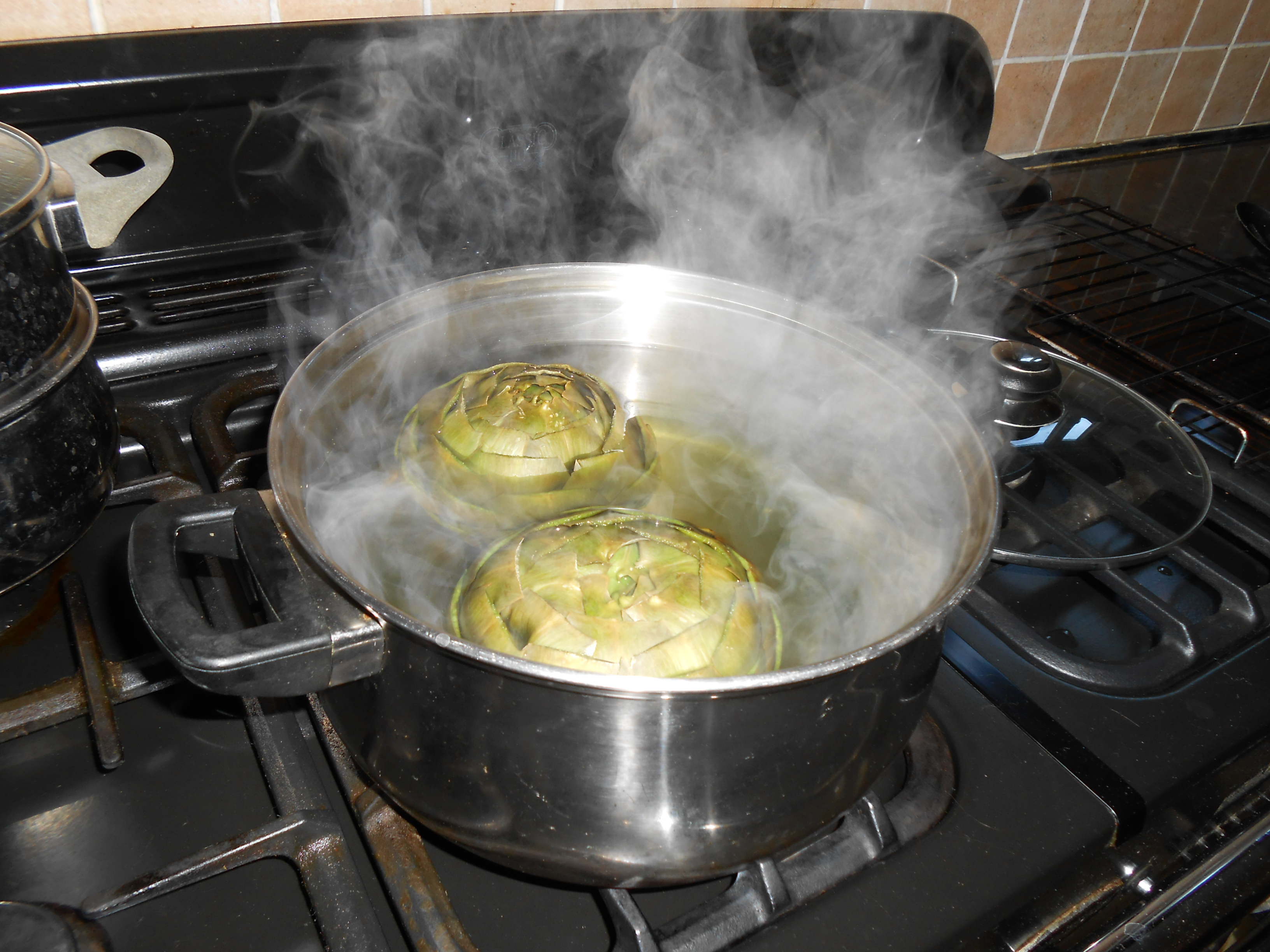
Put a knob of butter on top of the artichoke and let it soak in. I’m salivating at the sight of this, but am too ladylike to let go of any bloodhound-type drool streamers; especially bearing in mind that globe artichokes are served in posh restaurants as an expensive hor d’oeuvre. Some people prefer them served cold with vinaigrette, although I haven’t tried that version yet.

Wearing my scruffs, I peel off the leaves one-by-one, most daintily nibbling off the soft flesh near their bases. And a word of warning, don’t attempt to eat the hard part of the leaves but discard them in a side-bowl as you’d need to have teeth and a stomach like a goat to deal with them. Also, if you have long hair, tie it back or it will get butter all over it. As for Him Indoors, who’s sitting opposite me at the table, he mightn’t have long hair but he’s got himself in a right mess with butter all down his chin and his front.

And lastly, when you’ve removed all the leaves, this is what you’ll find in the middle. THE ARTICHOKE HEART. Yes, it’s worthy of capital letters. Just remove the tiny hairy flower tips from the centre of the heart as they’re a bit scratchy to eat, then pick up your knife and fork to eat this last delight in measured bites, and … more capital letters required … SAVOUR THE FLAVOUR.



 Sarah Potter Writes